

Shipping with this method takes 3-5 days
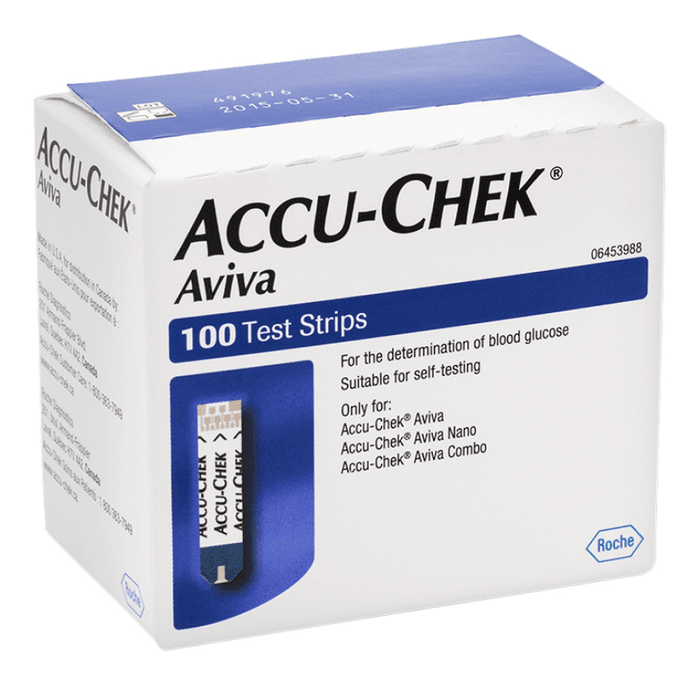
Accu-Chek Aviva Test Strips
Buy Accu-Chek Aviva Test Strips Online
Secure Encrypted Payments
Accu-Chek Aviva Test Strips are single-use blood glucose strips for at-home testing with compatible Accu-Chek Aviva meters. You can buy Accu-Chek Aviva Test Strips online, view current pricing, and choose the pack size shown during ordering to match your testing routine. They are used with a small capillary blood sample to help you track glucose readings as part of a diabetes care plan.
These strips are intended for people who already use an Aviva-series meter and need reliable refills for routine self-monitoring. BorderFreeHealth offers US delivery from Canada for customers restocking diabetes testing supplies, including cash-pay customers managing supplies out of pocket.
Price, Pack Size, and Ordering Details
The Accu-Chek Aviva Test Strips price can vary by pack size, current supply, and quantity selected. Common search interest includes Accu-Chek Aviva Test Strips 50 count and Accu-Chek Aviva Test Strips 100 count, but you should use the quantity currently shown during ordering rather than assuming every box size is available at all times. Larger quantities may reduce how often you need to reorder, while smaller packs may suit occasional or backup testing needs.
Before placing an order, confirm three practical details: your meter model, the strip name on the vial or box, and the number of strips you typically use per month. People who test several times daily may run through a vial quickly, while those who test only at specific times may prefer fewer strips to avoid keeping opened supplies for too long.
If you are paying without insurance, viewing the cash price before checkout can help you plan refills. Keep your usual testing schedule in mind when selecting quantity. Running out of strips can interrupt glucose tracking, especially during medication changes, illness, travel, or changes in diet and activity.
Quick tip: Check the strip name and meter family before reordering, because glucose test strips are not interchangeable across meter systems.
Compatibility With Accu-Chek Aviva Meters
Accu-Chek Aviva blood glucose test strips are designed for use with compatible meters in the Accu-Chek Aviva family. Use them only with the meter systems identified in your meter manual and strip instructions. If your meter, box, or user guide names a different strip, do not substitute these strips without confirming compatibility with a healthcare professional or the manufacturer’s compatibility information.
Many customers search for Accu-Chek Aviva Plus Test Strips when they mean strips for the Aviva system. Naming can vary by market and package, so the safest approach is to match the exact strip type required by your meter. The meter and strip work together as a testing system; using the wrong strip can lead to errors or unreliable readings.
These strips are not intended for OneTouch, FreeStyle, Contour, or other non-Aviva meters. If you are changing meter brands, you will need the matched strips for that new system. People comparing diabetes monitoring supplies can browse the diabetes supplies category for related testing products and accessories.
What the Strips Do
Accu-Chek Aviva Test Strips help measure glucose in a small drop of capillary blood, usually taken from a fingertip. After a strip is inserted into the meter and blood is applied to the sample area, the meter reads the strip chemistry and displays a blood glucose result. Your care team may use these readings to understand patterns around meals, activity, stress, illness, and medication timing.
Home blood glucose monitoring does not replace clinical lab testing or individualized medical guidance. It gives you and your clinician day-to-day data that may help with diabetes management decisions. People living with type 1 diabetes often use frequent monitoring as part of insulin management, while people with type 2 diabetes may test at times recommended by their healthcare professional.
Testing schedules vary. Some people check before meals, two hours after eating, at bedtime, before driving, before or after exercise, or when symptoms suggest high or low glucose. Follow the testing plan you were given, and ask for clarification if you are unsure when a result should prompt action.
How to Use Each Strip
There is no dose for a test strip, but technique matters. A clean, dry finger and an adequate blood sample help reduce avoidable errors. Always follow the instructions for your specific meter, lancing device, and strip vial.
- Wash your hands with soap and warm water, then dry them completely.
- Insert a new strip into the meter as directed by the user guide.
- Use a sterile lancet to obtain a small blood drop.
- Touch the blood drop to the strip’s sample area.
- Wait for the meter to display the result.
- Record the reading if your meter does not store it automatically.
Use one clean strip for each test. Do not reuse strips, apply blood to the wrong part of the strip, or share testing supplies. Used strips and lancets should be discarded safely according to local sharps and household waste guidance.
If your care plan includes alternate site testing, use the sites and timing described in your meter manual. Fingertip testing may be preferred when glucose is changing quickly, such as after meals, exercise, insulin use, or suspected hypoglycemia. If a result does not match how you feel, repeat the test with a new strip and contact a healthcare professional if concerns continue.
Accuracy Factors and Troubleshooting
Accurate readings depend on the strip, meter, sample, and testing conditions. Common reasons for unexpected readings include expired strips, a vial left open, damp or contaminated fingers, too little blood, applying the sample incorrectly, or using strips stored outside recommended conditions. Lot changes, control testing, and meter condition can also matter.
If your meter displays an error, follow the troubleshooting steps in the user guide. This may include repeating the test with a new strip, checking the expiration date, confirming the vial was closed tightly, or using control solution if your meter manual recommends it. Control solution can help determine whether the meter and strips are working within the expected range.
Do not make major treatment changes based on a single reading that seems inconsistent with symptoms. For example, if you feel shaky, sweaty, confused, unusually thirsty, or unwell, confirm the result when possible and follow the plan provided by your clinician. Seek urgent care when symptoms are severe or your diabetes action plan says to do so.
Storage, Handling, and Travel
Keep strips in the original vial with the cap closed tightly. Store the vial at room conditions away from heat, moisture, direct sunlight, bathrooms, and kitchens where humidity changes quickly. Do not transfer strips to a pill box, bag, or other container, because the vial helps protect them from environmental exposure.
Use strips before the expiration date on the package. Discard any strip from a damaged vial, a vial with a broken seal, or a vial that has been left uncapped for an extended period. Moisture and heat can affect strip chemistry, which may make results less dependable.
For travel, keep your meter, strips, lancets, and backup supplies in hand luggage. Pack more strips than you expect to need, especially for longer trips or schedule changes. BorderFreeHealth uses prompt, express shipping for customer orders, but it is still wise to reorder before your last vial is nearly empty.
Why it matters: Proper storage protects the strip chemistry that your meter relies on for each glucose reading.
Safety, Interferences, and When to Ask for Help
Test strips themselves do not cause medication-type side effects, but fingerstick testing can cause brief discomfort, tenderness, minor bruising, or skin irritation. Rotating fingers, using a fresh lancet, and adjusting lancing depth according to your device instructions may reduce soreness. Avoid sharing lancing equipment, even with family members.
The most important safety concern is acting on an inaccurate reading. Certain medical conditions, substances, or therapies can interfere with some blood glucose monitoring systems. Examples may include dialysis-related solutions, products that release certain sugars, severe dehydration, or high-dose vitamin C, depending on the meter and strip chemistry. Read the instructions that came with your strips and ask your clinician if any treatment you use could affect results.
Contact a healthcare professional if readings are repeatedly outside your target range, if results do not match symptoms, or if you are unsure how to respond to high or low glucose. Seek emergency help for severe symptoms such as confusion, fainting, seizure, persistent vomiting, or signs of severe hypoglycemia or hyperglycemia.
Who These Strips May Suit
These strips may suit adults, teens, or caregivers who use a compatible Accu-Chek Aviva meter for home blood glucose monitoring. They can be helpful for people who need a refill supply, a travel supply, or a backup vial for times when testing frequency increases. Caregivers should follow the person’s diabetes plan and keep supplies organized to avoid using the wrong strips.
They may not suit people who use another meter family or people whose clinician has advised a different monitoring system. If you are starting glucose monitoring for the first time, switching from another meter, or replacing a discontinued device, ask which meter-and-strip system best fits your treatment plan, vision, dexterity, insurance situation, and testing frequency.
People using insulin, sulfonylureas, or other therapies that can cause low blood glucose may have more specific monitoring instructions. Those who manage diabetes without medications that cause hypoglycemia may be advised to test less often. Your testing plan should reflect your diagnosis, medication regimen, and clinical goals.
Discontinued Status, Replacements, and Availability Questions
Many customers ask whether Accu-Chek Aviva test strips are discontinued because some meters or packages have changed over time and availability can differ by market. The practical question is whether your current meter still has a compatible strip supply. If you can still obtain the correct strips for your meter, confirm the strip name before ordering and keep an eye on your remaining supply.
If your meter is no longer supported or strips become difficult to find, your clinician or diabetes educator may recommend switching to a newer system. A replacement system usually requires a new meter and its matching strips. Do not assume that strips from a replacement device will work in an older Aviva meter.
When evaluating a switch, consider readability of the display, sample size, memory features, strip handling, lancing comfort, and how often you test. People who track glucose trends closely may also ask whether a meter connects to an app or whether continuous glucose monitoring is appropriate for their situation.
Related Diabetes Testing Choices
Glucose testing systems are brand- and meter-specific. If you already have an Aviva-series meter, staying with the correct Accu-Chek Aviva Test Strips avoids compatibility errors. If you are comparing systems, look at meter features and strip supply together rather than choosing one without the other.
People managing type 1 diabetes topics often focus on frequent testing, hypoglycemia planning, and backup supplies. People reading about type 2 diabetes topics may compare testing schedules, lifestyle patterns, and medication-related monitoring. These broader education areas can help you prepare better questions for your clinician.
For shoppers who prefer Canadian-supplied products, the Canada country-of-origin section can help identify items organized by origin. Always confirm the meter family and strip name before adding glucose supplies to your cart.
Questions to Ask Your Clinician
- How often should I test based on my medication and glucose goals?
- What target range should I use before meals, after meals, and at bedtime?
- Should I use fingertip testing only, or is alternate site testing appropriate?
- What symptoms should prompt me to repeat a test or seek urgent care?
- Could any medicine, supplement, dialysis solution, or health condition affect my readings?
- Do I need control solution, and when should I use it?
- Should I keep a backup meter or switch to a newer testing system?
Authoritative Sources
For device-specific instructions and compatibility details, rely on the materials that came with your meter and strip vial. Manufacturer instructions should be followed because each blood glucose monitoring system has its own handling, storage, and troubleshooting requirements.
- Manufacturer information for Accu-Chek Aviva strips
- Manufacturer compatibility information for Accu-Chek test strips
This content is for informational purposes only and is not a substitute for professional medical advice.
Blood Glucose Unit Converter
Convert glucose readings between mg/dL and mmol/L without changing the clinical value.
mg/dL
-
US reporting unit
mmol/L
-
International reporting unit
These calculations are for education only and do not replace clinical advice, diagnosis, or treatment. Always confirm medical decisions with a qualified healthcare professional.
HbA1c & eAG Calculator
Convert between HbA1c percentage and estimated average glucose using the ADAG relationship.
HbA1c
-
percentage
eAG mg/dL
-
estimated average glucose
eAG mmol/L
-
estimated average glucose
These calculations are for education only and do not replace clinical advice, diagnosis, or treatment. Always confirm medical decisions with a qualified healthcare professional.
CGM Time-in-Range Summary
Summarise CGM percentages across very low, low, in-range, high, and very high glucose bands.
Entered total
-
should equal 100%
Below range
-
very low plus low
Above range
-
high plus very high
Summary
-
common adult CGM targets vary by patient
These calculations are for education only and do not replace clinical advice, diagnosis, or treatment. Always confirm medical decisions with a qualified healthcare professional.
Carb Serving Calculator
Convert total carbohydrate grams into carb choices for meal planning and diabetes education.
Carb choices
-
total carbs divided by choice size
Rounded choices
-
nearest half choice
Carb calories
-
4 kcal per gram
These calculations are for education only and do not replace clinical advice, diagnosis, or treatment. Always confirm medical decisions with a qualified healthcare professional.
Corrected Sodium Calculator
Estimate sodium corrected for hyperglycemia using common 1.6 and 2.4 correction factors.
Corrected sodium
-
1.6 factor
Corrected sodium
-
2.4 factor
These calculations are for education only and do not replace clinical advice, diagnosis, or treatment. Always confirm medical decisions with a qualified healthcare professional.
Express Shipping - from $29.99
Prices:
- Dry-Packed Products $29.99
- Cold-Packed Products $39.99
Shipping Countries:
- United States (all contiguous states**)
- Worldwide (excludes some countries***)
Standard Shipping - $19.99
Shipping with this method takes 5-10 days
Prices:
- Dry-Packed Products $19.99
- Not available for Cold-Packed products
Shipping Countries:
- United States (all contiguous states**)
- Worldwide (excludes some countries***)
What strips are compatible with Accu-Chek Aviva meters?
Use only the strips identified for your specific Accu-Chek Aviva meter in the meter manual or manufacturer compatibility information. Glucose test strips are not interchangeable across meter systems, even when brand names sound similar.
Are Accu-Chek Aviva test strips discontinued?
Availability can vary by market and by meter generation. The key is whether your exact Aviva-series meter still has a compatible strip supply. If supplies become difficult to find, ask your clinician or diabetes educator about switching to a newer meter-and-strip system.
How many times can I use one Accu-Chek Aviva Test Strip?
Each strip is single use only. Use a new strip for every test, and discard used strips safely after the reading is complete.
Why might my glucose reading look wrong?
Unexpected readings can happen if strips are expired, exposed to moisture or heat, used with the wrong meter, or used with too little blood. Contaminated hands and certain medical products or conditions may also affect some systems. Repeat the test with a new strip if the result does not match how you feel.
How should I store Accu-Chek Aviva Test Strips?
Keep strips in the original vial with the cap closed tightly. Store them away from heat, moisture, bathrooms, direct sunlight, and damaged containers. Use them before the expiration date printed on the package.
Can I travel with Accu-Chek Aviva Test Strips?
Yes. Keep your meter, strips, lancets, and backup supplies in hand luggage. Avoid leaving strips in hot cars, checked bags exposed to temperature extremes, or humid areas.
Rewards Program
Earn points on birthdays, product orders, reviews, friend referrals, and more! Enjoy your medication at unparalleled discounts while reaping rewards for every step you take with us.
You can read more about rewards here.
POINT VALUE
How to earn points
- 1Create an account and start earning.
- 2Earn points every time you shop or perform certain actions.
- 3Redeem points for exclusive discounts.
You Might Also Like
Select options
This product has multiple variants. The options may be chosen on the product page
Select options
This product has multiple variants. The options may be chosen on the product page
Select options
This product has multiple variants. The options may be chosen on the product page
Select options
This product has multiple variants. The options may be chosen on the product page