

Please note: a valid prescription is required for all prescription medication.
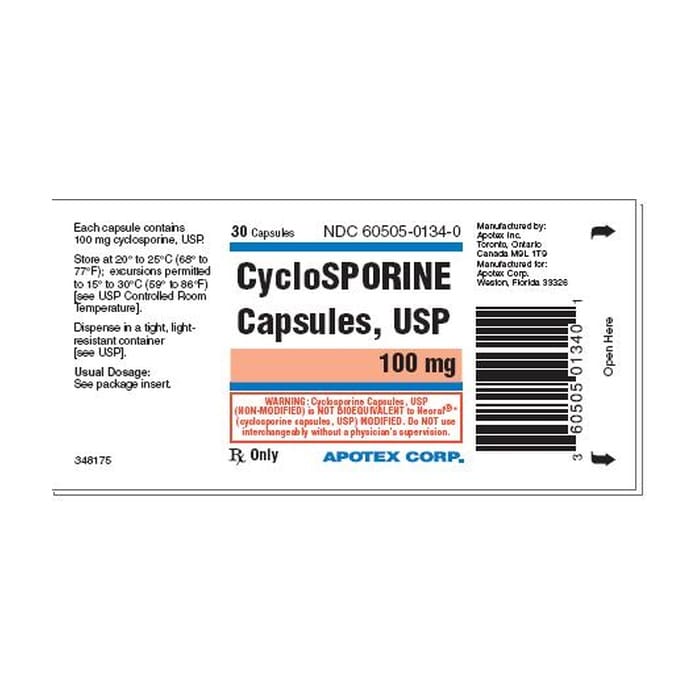
Cyclosporine
Cyclosporine (Sandimmune, Neoral, Gengraf)
Price:
Price range: $54.99 through $130.99
Secure Encrypted Payments
This page covers an oral prescription immunosuppressant used in transplant medicine and certain autoimmune conditions. It summarizes what Cyclosporine does, how it is taken, and what safety monitoring often involves with US shipping from Canada for cash-pay access without insurance. Use it to review formulation differences, side effects, and interaction risks before discussing next steps with a prescriber.
People may also see this medicine listed as cyclosporin or cyclosporine A. Some products are labeled “modified” (microemulsion) and others are not, and they are not automatically interchangeable. The sections below explain common terminology, practical handling, and where to find official references. For related therapy areas, browse Immunology Medications or the Organ Transplant Rejection hub for comparable prescription categories.
What Cyclosporine Is and How It Works
This treatment is an immunosuppressant (immune-system calming medicine) in the calcineurin inhibitor class. It lowers certain immune signals that drive inflammation and rejection, which can help protect transplanted organs and reduce immune-mediated tissue damage. Because the immune system is intentionally dampened, extra attention to infection prevention and routine monitoring is part of safe use.
Medication is sourced through licensed Canadian partner pharmacies that follow local dispensing standards.
For cross-border prescription access, documentation requirements and dispensing rules can differ by product and indication; Ships from Canada to US programs often also require identity and prescription validation. Consistent communication between the dispensing pharmacy and the prescriber helps avoid formulation mix-ups, especially when refills are needed.
Why it matters: Modified and non-modified cyclosporine products are not automatically substitutable.
Brand names may include Sandimmune (non-modified) and Neoral or Gengraf (modified). The “modified” label generally refers to how the drug is formulated to improve and stabilize absorption, not to a different active ingredient. Switching between forms without prescriber direction can change drug exposure, which is why labels, pharmacy records, and prior authorizations often specify the exact product type.
Who It’s For
This medicine is commonly prescribed to help prevent organ transplant rejection and may also be used for select severe inflammatory or autoimmune conditions when other options are not suitable. Indications depend on the specific product (modified vs non-modified), the patient’s condition, and the prescriber’s plan for monitoring.
In practice, Cyclosporine may be considered in areas such as:
- Transplant maintenance therapy
- Severe rheumatoid arthritis
- Severe psoriasis
- Other specialist-directed immune disorders
Not everyone is a candidate. A prescriber may avoid or use extra caution in people with uncontrolled infections, certain cancers, significant kidney or liver impairment, or uncontrolled high blood pressure. Pregnancy and breastfeeding considerations can also affect suitability, depending on the clinical context and the product’s labeling.
Some people encounter cyclosporine in non-oral forms, including eye drops used in dry eye disease. Those products treat a local surface condition and are not interchangeable with oral therapy. For browseable related topics, see the Dry Eye category or the Rheumatoid Arthritis hub for condition-based collections.
Dosage and Usage
Dosing schedules are individualized and based on the indication, product type, other medicines, and lab monitoring. Oral regimens are often taken on a consistent schedule each day to keep drug exposure steady. For some transplant protocols, clinicians may use blood-level monitoring (trough concentration testing) along with kidney function and blood pressure checks to guide dose adjustments.
Cyclosporine is typically taken by mouth as capsules or an oral solution, and the exact directions on the prescription label should be followed. If a liquid is dispensed, measuring with the provided dosing device is important for accuracy. Because food can affect absorption for some products, prescribers often recommend taking doses the same way each time (for example, consistently with or without meals), rather than frequently changing routines.
Modified vs non-modified products
Labels may describe a product as cyclosporine modified (microemulsion) or non-modified. These forms can have different absorption characteristics, which can change blood levels even when the same mg amount is taken. Pharmacy records and refill requests should match the originally prescribed product type unless the prescriber intentionally switches it. This distinction also matters when people compare cyclosporine brand names, generic cyclosporine options, or older listings such as Sandimmune versus Neoral.
If a dose is missed, the safest next step is to follow the written instructions provided with the prescription or ask the dispensing pharmacy or prescriber for guidance. Doubling up doses or “catching up” can raise exposure and increase side-effect risk, especially for medicines that require monitoring.
Strengths and Forms
Oral cyclosporine is available in more than one dosage form, and availability can vary by manufacturer and country. Most prescriptions are filled as capsules (sometimes called cyclosporine pills), while some are supplied as an oral cyclosporine liquid for people who need flexible dosing. Although people may search for cyclosporine tablets, many markets primarily use capsule and solution forms.
Cyclosporine is dispensed in multiple strengths, and the label will list the total dose in mg and how often it is taken. Common presentations can include several capsule strengths and an oral solution concentration; the dispensed option depends on the prescription and product type (modified vs non-modified).
| Form | Typical use notes |
|---|---|
| Capsules | Often used for long-term maintenance; keep product type consistent. |
| Oral solution | Useful when dose flexibility is needed; measure carefully with a dosing device. |
When reviewing a medication list, it can help to note both the brand and the generic name, plus whether the product is modified. This reduces confusion during refills, transitions of care, or when comparing records from multiple pharmacies.
Storage and Travel Basics
Storage instructions depend on the exact product and dosage form, so the pharmacy label and accompanying leaflet should be treated as the primary reference. In general, oral immunosuppressants are stored at controlled room temperature, protected from excess heat, moisture, and direct light. Some liquid formulations should not be refrigerated or frozen unless the label specifically says otherwise.
Changes in color, strong new odors, or leakage are reasons to check with a pharmacist before using the medicine. For capsules, keeping them in the original blister packaging or container can help protect them from humidity. For the oral solution, keep the cap tightly closed and avoid transferring it into unmarked containers that could be mistaken for another liquid.
Quick tip: Keep a current medication list and prescriber contact details with travel documents.
Security screening and time-zone changes can complicate adherence for medicines taken on a fixed schedule. A pharmacist can explain how to transport liquids, what to do if a bottle breaks, and how to interpret label instructions when traveling. For broader context on eye health changes that can affect medication routines, the resource Vision Changes With Age may be helpful.
Side Effects and Safety
Like other immune-suppressing therapies, Cyclosporine can cause side effects ranging from mild and manageable to serious. Many effects relate to how the drug influences kidneys, blood pressure, and immune function. The risk profile depends on dose, treatment duration, product type, and other health conditions.
Prescriptions are confirmed with the original prescriber before a partner pharmacy dispenses.
Commonly reported effects can include stomach upset, nausea, diarrhea, headache, tremor, flushing, increased hair growth, or gum swelling (gingival hyperplasia). Some people also notice fatigue or muscle aches. These effects are not always dangerous, but they can be important to report because they may signal that monitoring or supportive care is needed.
- Infection risk: fevers, persistent sore throat
- Kidney effects: reduced urination, swelling
- Blood pressure: headaches, dizziness
- Liver effects: dark urine, jaundice
- Neurologic effects: severe tremor, confusion
Serious risks include kidney toxicity, hypertension, significant electrolyte changes (such as high potassium), severe infections, and an increased risk of certain cancers with long-term immunosuppression. Routine lab work and blood pressure checks are common parts of follow-up. People using topical cyclosporine eye drops often see different side effects than oral therapy; for a general discussion of ocular side effects, see Restasis Common Side Effects as a related-read example (route of administration differs).
Because immune suppression can mask typical infection symptoms, clinicians often encourage prompt reporting of new fevers, cough, painful urination, or wounds that do not heal. The official product labeling remains the best source for contraindications and safety warnings for a specific formulation.
Drug Interactions and Cautions
This medicine has clinically important interactions, largely because it is metabolized through CYP3A enzymes and transported by P-glycoprotein. Interacting drugs can raise or lower blood levels, changing both side-effect risk and effectiveness. A complete, up-to-date medication list should include prescriptions, over-the-counter products, vitamins, and herbal supplements.
Cyclosporine interactions and cautions commonly discussed in labeling and clinical practice include:
- Grapefruit: may raise levels
- St. John’s wort: may lower levels
- Macrolide antibiotics: may raise levels
- Azole antifungals: may raise levels
- Seizure medicines: may lower levels
- NSAIDs: added kidney strain
Other considerations include potassium supplements, certain diuretics, and additional nephrotoxic drugs (medicines that can stress kidneys). Live vaccines are sometimes avoided during immunosuppression; timing and appropriateness depend on the clinical situation and current immune status.
If a new prescription is added by another clinician, it helps to flag that this is a calcineurin inhibitor so potential interactions are reviewed. Pharmacists may also check for duplicate therapies or product-type mismatch, especially when switching between cyclosporine modified and non-modified formulations.
Compare With Alternatives
Alternatives depend on why immunosuppression is needed. In transplant care, other regimens may include tacrolimus, mycophenolate, azathioprine, sirolimus, or corticosteroids, selected and combined based on organ type, rejection risk, and tolerability. For autoimmune conditions, prescribers may consider disease-modifying therapies, biologics, or short-term steroids before or alongside calcineurin inhibitors.
Route matters. Oral therapy affects the whole body, while ophthalmic products treat the eye surface. For example, Restasis and Cequa are cyclosporine eye drops used for dry eye disease, not for transplant rejection prevention. Another non-cyclosporine option for dry eye is lifitegrast; a condition-focused overview is available in Restasis Vs Xiidra Comparison.
When comparing products, focus on formulation type, monitoring needs, and the prescriber’s target goals rather than capsule color, brand familiarity, or general online lists of “equivalents.” Those details can be misleading for medicines with narrow therapeutic ranges (where small level changes can matter).
Pricing and Access
People researching Cyclosporine pricing often see wide variation based on formulation type (modified vs non-modified), brand versus generic, strength, and the dispensing channel. Because this therapy may require ongoing monitoring, access decisions usually also consider lab costs and clinician follow-up, not only the medication itself.
Cash-pay options can support access for patients without insurance.
BorderFreeHealth supports cross-border access by coordinating with licensed Canadian dispensing partners for eligible prescriptions. Records typically need a valid prescription, and the dispensing pharmacy may confirm details with the prescriber before filling. For those comparing cyclosporine cost across options, it can help to verify whether a listing refers to cyclosporine modified capsules or non-modified products, since they are not handled as identical substitutes.
If promotional programs are available, they are listed on the Promotions page; availability and eligibility can change and are not guaranteed. For condition-related browsing that may affect which therapies are discussed with a specialist, the Psoriasis Treatments category can also provide a sense of medication classes commonly used in inflammatory disease care.
Authoritative Sources
For any prescription immunosuppressant, the most reliable details come from the specific product monograph or U.S. labeling for the exact formulation dispensed. These references describe approved uses, contraindications, interaction lists, monitoring recommendations, and storage instructions in a standardized format. If a generic substitution occurs, reviewing the new leaflet can help confirm whether the product is modified or non-modified and whether administration directions changed.
For neutral, label-grounded references, consult: MedlinePlus Drug Information; or review official labeling records via DailyMed Label Search.
For site requests, you can create an account, upload a valid prescription, and choose prompt, express shipping at checkout.
This content is for informational purposes only and is not a substitute for professional medical advice.
Express Shipping - from $25.00
Shipping with this method takes 3-5 days
Prices:
- Dry-Packed Products $25.00
- Cold-Packed Products $35.00
Shipping Countries:
- United States (all contiguous states**)
- Worldwide (excludes some countries***)
Standard Shipping - $15.00
Shipping with this method takes 5-10 days
Prices:
- Dry-Packed Products $15.00
- Not available for Cold-Packed products
Shipping Countries:
- United States (all contiguous states**)
- Worldwide (excludes some countries***)
What is the difference between cyclosporine modified and non-modified?
“Modified” and “non-modified” refer to how oral cyclosporine is formulated and absorbed, not to a different active ingredient. Modified products (often described as microemulsion) tend to have more predictable absorption, while non-modified products can absorb differently. Because these forms can produce different blood levels, they are not automatically interchangeable. Prescribers often specify the exact product type and may use lab monitoring to guide dosing, especially after a switch. A pharmacist can confirm what form is listed on the dispensed label.
Is oral cyclosporine the same as cyclosporine eye drops for dry eye?
No. Oral cyclosporine is a systemic immunosuppressant that affects immune activity throughout the body and is used in settings such as transplant care or certain severe inflammatory diseases. Cyclosporine eye drops are formulated for local action on the eye surface and are used for dry eye disease; their side effects and monitoring needs are different. The dose and product labeling are not comparable between oral and ophthalmic forms. Medication lists should specify the route (by mouth vs eye) to avoid confusion.
What monitoring is usually needed while taking cyclosporine?
Monitoring depends on the indication and product, but clinicians commonly follow kidney function tests, blood pressure, and electrolytes (such as potassium). In transplant settings and some other uses, blood cyclosporine levels may be checked to help guide dosing, especially after starting therapy, changing formulations, or adding interacting drugs. Because immunosuppression can increase infection risk, symptom review and periodic exams may also be part of follow-up. The exact schedule and targets come from the prescriber and the product’s labeling.
Can cyclosporine be taken with grapefruit or herbal supplements?
Grapefruit and grapefruit juice are commonly flagged because they can increase cyclosporine blood levels by affecting metabolism, which may raise side-effect risk. Certain herbal products may also interact; St. John’s wort is a well-known example that can lower levels and reduce intended effect. Other supplements can affect kidney function or electrolytes, indirectly changing safety. Because interaction risk can be clinically significant, prescribers and pharmacists typically want a complete list of supplements, teas, and over-the-counter products before therapy starts.
What should be discussed with a clinician before starting cyclosporine?
Key topics often include current kidney and liver health, blood pressure history, infection history, cancer history, and all current medications and supplements. It is also important to discuss vaccination timing, pregnancy or breastfeeding considerations, and whether the prescribed product is modified or non-modified. If therapy is for transplant care, clinicians may also review target drug levels and the monitoring plan. Bringing an accurate medication list and prior reaction history can help the care team assess interaction and safety risks.
What are common reasons cyclosporine doses get changed?
Dose changes are commonly driven by lab results, side effects, blood pressure readings, or drug level monitoring (when used). Adding or stopping an interacting medicine, changing the cyclosporine formulation (modified vs non-modified), or changes in kidney function can also prompt reassessment. In some cases, changes in symptoms or evidence of rejection or flare may affect the plan. Dose adjustments should be guided by a prescriber because small changes can matter for safety and effectiveness, and monitoring often accompanies any change.
Rewards Program
Earn points on birthdays, product orders, reviews, friend referrals, and more! Enjoy your medication at unparalleled discounts while reaping rewards for every step you take with us.
You can read more about rewards here.
POINT VALUE
How to earn points
- 1Create an account and start earning.
- 2Earn points every time you shop or perform certain actions.
- 3Redeem points for exclusive discounts.
How to book an appointment
- 1Create Begin by completing a profile or log into your existing account. This step ensures we have the necessary information to provide you with a service that's tailored to your needs. account and start earning.
- 2Scheduling an appointment with our online booking system is easy. Pick a day and time that suits you. You’ll receive an immediate confirmation, without the wait.
- 3Discuss your concerns and symptoms and receive a thorough diagnosis from one of our licensed doctors during a confidential video appointment.
- 4If you've been prescribed medication, your Rx is sent directly to one of our licensed pharmacies and delivered right to your door.
Get Started
To book an online doctor appointment, register for an account or login. After doing so, you can book your visit on this page.
You Might Also Like
Select options
This product has multiple variants. The options may be chosen on the product page
Select options
This product has multiple variants. The options may be chosen on the product page
Select options
This product has multiple variants. The options may be chosen on the product page
Select options
This product has multiple variants. The options may be chosen on the product page