
Please note: a valid prescription is required for all prescription medication.
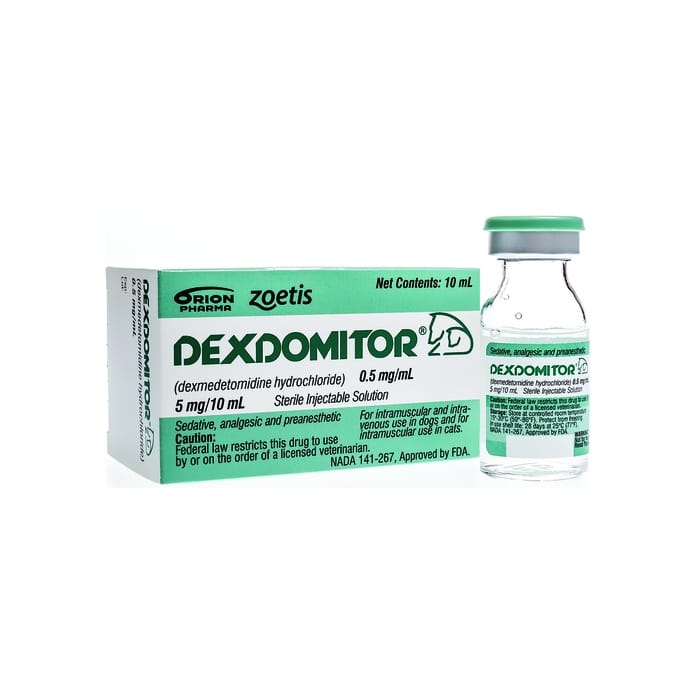
Dexdomitor Vial
Buy Dexdomitor Vial Online
Secure Encrypted Payments
Dexdomitor Vial is a dexmedetomidine hydrochloride injection used by veterinarians for sedation and analgesia in dogs and cats. It can be ordered through licensed pharmacy channels, with the 0.5 mg/mL sterile vial matched to the veterinarian’s procedural plan. Because this medicine can slow heart rate and affect breathing, blood pressure, and body temperature, it is intended for carefully supervised veterinary use rather than casual calming at home.
Dexdomitor Vial Price, Strength, and Ordering Basics
Dexdomitor Vial is commonly identified as Dexdomitor Injection 0.5 mg/mL in a 10 mL multidose sterile vial. When viewing current pricing, match the concentration, vial size, and intended veterinary use to the clinic’s directions. Small differences in concentration matter with injectable sedatives, so the vial strength should be checked before the order is completed and again before administration.
Cost can vary by source, vial format, and cash-pay purchasing needs. Some pet owners also look at US delivery from Canada when sourcing veterinary medicines through licensed pharmacies. We may review order details when needed so the product supplied aligns with the animal species, the active ingredient, and the requested vial concentration.
The practical buying path usually begins with a veterinary assessment for a defined examination, imaging visit, wound treatment, minor procedure, dental plan, or handling need. Dexdomitor is not a substitute for training, behavior therapy, routine anxiety support, or an owner-selected sleep aid. It is a potent alpha-2 agonist, meaning it acts on nervous system receptors that reduce alertness, provide analgesia, and change cardiovascular tone.
- Match the vial concentration to the clinic plan.
- Use only for the animal and procedure directed by a veterinarian.
- Ask how the pet will be monitored during recovery.
- Tell the care team about prior sedation reactions.
- Keep the vial in original packaging until use.
What Dexdomitor Is Used For in Dogs and Cats
Dexdomitor is used in veterinary medicine when controlled sedation and pain relief are needed for dogs or cats. A veterinarian may choose it for examinations that require stillness, diagnostic imaging, wound care, minor procedures, dentistry-related handling, or as part of a broader anesthetic plan. Its role is procedural: the goal is predictable restraint, comfort, and recovery under professional observation.
The medicine may be given by intramuscular or intravenous injection depending on the species, the procedure, the desired onset, and the monitoring environment. Those routes are not interchangeable for owners to choose. Route selection changes how quickly effects appear and how closely the animal may need observation.
Pet owners browsing the wider care category can use the veterinary sedation category to understand how procedural sedatives differ from routine calming products. If pain control is part of the broader visit, the pet pain category can help frame questions for the veterinary team, although pain medicines and sedatives do not serve the same purpose.
Active Ingredient, Form, and Product Details
The active ingredient is dexmedetomidine hydrochloride, supplied as a sterile injectable solution. Dexdomitor Vial is commonly described by its 0.5 mg/mL concentration and multidose vial format. A multidose vial is designed for repeated needle entry using sterile technique, which is why handling, storage, and contamination prevention matter.
| Attribute | Dexdomitor Vial information |
|---|---|
| Active ingredient | Dexmedetomidine hydrochloride injection |
| Concentration | 0.5 mg/mL |
| Common presentation | 10 mL multidose sterile vial |
| Animal use context | Dogs and cats when selected by a veterinarian |
| Typical setting | Veterinary administration with monitoring |
| Clinical role | Sedation and analgesia for defined procedures or handling |
Dexdomitor injectable sedation is not the same as an oral tranquilizer or over-the-counter calming supplement. It can produce deep sedation, and its physiologic effects may be stronger than a pet’s outward calmness suggests. The clinic’s plan should include observation before, during, and after the injection.
Dosing and Administration Decisions
Dexdomitor dosing is individualized. Species, body weight, route, procedure type, expected pain, temperament, age, and current health all influence the calculation. Online dose charts, forum examples, or leftover treatment instructions should not be used to determine an injection amount.
Veterinarians may use dexmedetomidine alone or combine it with other medicines as part of a protocol. Opioids, anesthetic agents, or other sedatives can change the depth and duration of sedation. That can be useful in a planned clinical setting, but it also increases the importance of accurate medication history and hands-on monitoring.
Recovery time varies. A pet’s age, breed, body condition, temperature, cardiovascular status, other medicines, and route of administration can all affect how long sedation lasts. Some procedures may include a veterinarian-selected reversal medicine after the sedated task is complete, but that decision depends on the whole case.
Why it matters: The safest dose is the one calculated for the specific animal and procedure.
Storage, Handling, and Travel
Store Dexdomitor Vial according to the pharmacy label and official product instructions. Keep it closed, protected from contamination, and out of reach of children and animals. A pet that chews or punctures packaging may be exposed to medicine or glass, so storage should be secure rather than simply out of sight.
Because this is a sterile multidose vial, inspect it before use. Do not use a vial that appears cracked, leaking, cloudy, discolored, or contaminated unless a pharmacist or veterinary professional confirms it is acceptable. Once the vial has been entered, follow any beyond-use or handling guidance provided with the medicine.
For travel to a veterinary visit, keep the vial in original packaging and avoid extreme heat or freezing conditions. Prompt, express shipping may be part of order logistics, but product handling still depends on following the label once it arrives. Quick tip: Carry clinic paperwork with the package when transporting veterinary injectables.
Side Effects, Warnings, and Monitoring
Dexdomitor Vial can cause deep sedation, slow heart rate, blood pressure changes, lower body temperature, vomiting, pale gums, and breathing changes. These effects are expected possibilities with an alpha-2 agonist and are one reason veterinarians plan monitoring instead of relying on appearance alone. A quiet pet may still need temperature support, airway observation, and circulation checks.
Serious warning signs after administration include collapse, very weak pulses, marked breathing difficulty, severe paleness, failure to wake as expected, or lack of response to stimulation. Those signs require prompt veterinary assessment. Owners should also follow discharge instructions closely, including feeding, warmth, activity restriction, and when to seek urgent care.
Dexdomitor may be a poor fit for animals with significant heart disease, unstable blood pressure, shock, severe respiratory compromise, major debilitation, or other conditions that increase sedation risk. Young, elderly, brachycephalic, dehydrated, or medically fragile pets may need a different plan or more intensive monitoring. A prior unusual response to sedation should be discussed before this medicine is used again.
Drug interactions are clinically important. Other sedatives, opioids, anesthetics, central nervous system depressants, certain heart medicines, seizure treatments, and anxiety medicines can intensify or complicate dexmedetomidine’s effects. Supplements should be mentioned too, because the veterinarian needs a complete picture before choosing a protocol.
When Dexdomitor May Not Be the Right Choice
Dexdomitor is chosen for specific sedation and analgesia goals, not for every restless or fearful pet. If an animal needs long-term anxiety care, travel calming, noise-phobia support, or behavior modification, the veterinary team may recommend a different medication category or non-drug plan. Procedural sedation and everyday behavior support have different safety expectations.
The medicine may also be avoided or adjusted when a procedure is expected to be longer, more painful, or more physiologically stressful than first planned. In those cases, the veterinarian may choose a different anesthetic sequence, add monitoring equipment, or use additional supportive care. The protocol should match both the procedure and the animal’s current stability.
Owners should ask what level of sedation is expected, how pain will be managed, whether a reversal step is planned, and what recovery milestones must be met before discharge. Those questions help connect the vial being purchased with the real-world care plan, rather than treating the injection as a stand-alone product.
How It Compares With Related Sedation Options
Veterinarians may compare dexmedetomidine with other injectable or oral sedation approaches depending on the procedure and the pet’s risk profile. Acepromazine-containing protocols, for example, may provide tranquilization but do not work the same way as dexmedetomidine and have different recovery and cardiovascular considerations. Opioid or benzodiazepine combinations may be selected when a different balance of restraint, pain control, and circulation effects is desired.
Related veterinary sedative products may be considered only with professional direction. Dexmedesed Vial and Dexvetidine Vial are nearby dexmedetomidine-related product choices for veterinary sedation discussions. For different protocol types, Acevet 25 Injectable, Atravet, and Isoflurane may appear in broader anesthesia or restraint planning, but they are not automatic substitutes for Dexdomitor Vial.
For general browsing across animal treatments, the pet medications category can help separate sedation products from pain control, nausea treatment, allergy care, and chronic therapies. The best comparison is not simply which product is strongest. It is which protocol fits the animal, the procedure, the monitoring setting, and the recovery plan.
Questions to Ask Before a Sedation Visit
Before the appointment, ask the veterinary team what Dexdomitor is intended to accomplish and how the pet will be observed. Useful questions include whether the injection is planned for restraint, analgesia, premedication, or a combination of goals. It also helps to ask whether food restrictions, recent medicines, or medical conditions change the plan.
After the procedure, recovery instructions should be specific. Owners should know when the pet may eat, how warm the recovery area should be, what behavior is expected, and which signs should trigger a phone call or emergency visit. Sedation recovery can look uneventful, but monitoring continues until the animal is stable enough for normal home care.
If the pet receives other medicines for pain, nausea, seizures, heart disease, anxiety, or chronic illness, bring the current list to the appointment. Dose timing matters, even for medicines given earlier in the day. The more accurate the history, the easier it is for the veterinarian to reduce avoidable sedation risk.
Authoritative Sources
For official prescribing and safety information, see the Zoetis Dexdomitor prescribing information.
For a labeled drug record, review the DailyMed dexmedetomidine injection record.
For plain-language veterinary medication context, see the VCA Hospitals dexmedetomidine overview.
This content is for informational purposes only and is not a substitute for professional medical advice.
Research & Education Tool
Dexdomitor Vial Dosage Calculator
Enter the vial amount, diluent volume, and target amount to estimate concentration, draw volume on a 1 mL U-100 syringe, and approximate vial yield.
For research and educational use only. Check all values against the product label, certificate of analysis, and any applicable professional guidance before relying on the result.
mg
Concentration
-
mcg / mL
Volume per Dose
-
-
Estimated Draws / Vial
-
rounded down to whole draws
Draw Reference
Enter values to estimate the syringe mark.
0
-
-
-
-
Express Shipping - from $29.99
Shipping with this method takes 3-5 days
Prices:
- Dry-Packed Products $29.99
- Cold-Packed Products $39.99
Shipping Countries:
- United States (all contiguous states**)
- Worldwide (excludes some countries***)
Standard Shipping - $19.99
Shipping with this method takes 5-10 days
Prices:
- Dry-Packed Products $19.99
- Not available for Cold-Packed products
Shipping Countries:
- United States (all contiguous states**)
- Worldwide (excludes some countries***)
What is Dexdomitor Vial used for?
Dexdomitor Vial is a dexmedetomidine hydrochloride injection used by veterinarians for sedation and analgesia in dogs and cats. It may be chosen for examinations, imaging, wound care, minor procedures, dental-related handling, or as part of a broader anesthetic plan.
What strength is Dexdomitor Vial?
Dexdomitor Vial is commonly identified as a 0.5 mg/mL sterile injectable solution in a 10 mL multidose vial. The concentration should match the veterinarian’s directions because injectable sedative dosing depends on species, weight, route, and procedure.
Can Dexdomitor be used at home to calm a pet?
Dexdomitor should not be treated like a routine calming product. It can cause deep sedation, slow heart rate, blood pressure changes, body temperature changes, and breathing effects, so use is generally planned and monitored by a veterinary professional.
How long does Dexdomitor sedation last?
Duration varies by route, species, age, health status, procedure, and other medicines used. Some veterinary protocols may include a reversal medicine, but that decision belongs to the veterinarian managing the sedation and recovery plan.
What side effects should owners watch for after Dexdomitor?
Possible effects include deep sleepiness, vomiting, slow heart rate, pale gums, lower body temperature, and breathing changes. Collapse, very weak pulses, severe breathing difficulty, failure to wake as expected, or unresponsiveness need prompt veterinary attention.
What medicines can interact with Dexdomitor?
Other sedatives, opioids, anesthetics, central nervous system depressants, some heart medicines, seizure treatments, anxiety medicines, and supplements may affect sedation depth or recovery. Give the veterinary team a complete medication list before the procedure.
Rewards Program
Earn points on birthdays, product orders, reviews, friend referrals, and more! Enjoy your medication at unparalleled discounts while reaping rewards for every step you take with us.
You can read more about rewards here.
POINT VALUE
How to earn points
- 1Create an account and start earning.
- 2Earn points every time you shop or perform certain actions.
- 3Redeem points for exclusive discounts.
You Might Also Like
Select options
This product has multiple variants. The options may be chosen on the product page
Select options
This product has multiple variants. The options may be chosen on the product page
Select options
This product has multiple variants. The options may be chosen on the product page
Select options
This product has multiple variants. The options may be chosen on the product page