
Shipping with this method takes 3-5 days
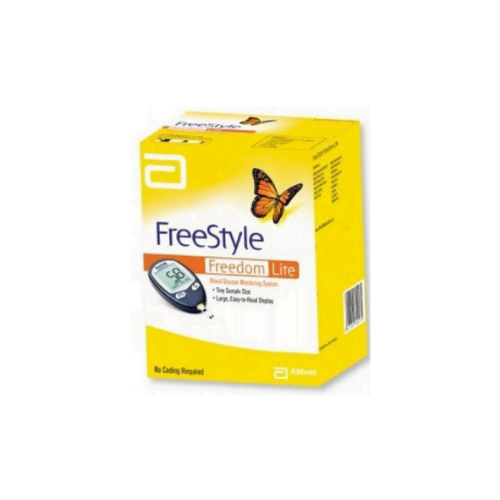
Freestyle Freedom Lite Meter
Buy FreeStyle Freedom Lite Meter Online
Secure Encrypted Payments
FreeStyle Freedom Lite Meter is an Abbott home blood glucose monitor used for capillary blood sugar testing with a fingertip sample. You can order the FreeStyle Freedom Lite Meter online, view the current cash price during checkout, and choose the available meter configuration that matches your testing needs and clinician’s instructions. The device is intended to help adults with diabetes track glucose readings at home as part of an ongoing care plan.
This meter is designed for simple everyday testing. It uses compatible FreeStyle Lite test strips, a lancing device, and sterile lancets to measure glucose from a small drop of blood. The large numeric screen and straightforward button layout can be helpful for people who want a readable, easy-to-hold blood glucose meter for adults.
Price, Ordering, and Supply Planning
The FreeStyle Freedom Lite Meter price can vary by supply source, package contents, and current inventory. During ordering, review the displayed cash price, any included meter-kit components, and the total before checkout. This is often useful for people paying out of pocket, budgeting for replacement meters, or keeping a backup device for continuous glucose monitor confirmation.
BorderFreeHealth offers US delivery from Canada for this product. If you also need ongoing testing supplies, plan the meter and strip purchase together so the strip type matches the meter family. You can browse related glucose testing items in diabetes supplies when building a practical home testing setup.
Quick tip: Keep a simple inventory note for strips, lancets, batteries, and control solution so testing is not interrupted.
What the Meter Is Used For
The FreeStyle Freedom Lite glucose meter is used for quantitative measurement of glucose in capillary whole blood. In everyday terms, it helps you see a blood sugar value from a fingertip sample at a specific moment. It does not replace clinical judgment, A1C testing, or emergency care when symptoms are severe.
People with type 2 diabetes may use a fingerstick meter to understand fasting levels, meal effects, illness patterns, or medication response. People with type 1 diabetes may use it for scheduled checks, backup testing, or confirmation when symptoms do not match a sensor reading. Your care team should set your testing times and target ranges.
The device is not intended for neonatal testing. Readings may be less reliable in certain situations, including severe dehydration, shock, poor peripheral circulation, or conditions that affect blood chemistry. If a value does not fit how you feel, repeat the test correctly and follow your clinician’s plan for urgent or confirmatory care.
How the FreeStyle Freedom Lite System Works
The FreeStyle Freedom Lite system uses electrochemical test strip technology. After you insert a compatible strip and apply a blood drop to the strip tip, the meter analyzes the reaction and displays a glucose value. No manual coding is typically associated with this meter family, which reduces one step that older glucose meters often required.
Most users follow a repeating routine: wash and dry hands, insert a new strip, lance the side of a fingertip, apply the blood sample, wait for the reading, and record the result. Clean hands matter because food residue, lotion, or moisture can affect the sample. A fresh strip and proper storage also support more dependable readings.
Control solution may be used to confirm that the meter and strips are working together as expected. Run a control test according to the user manual, especially after opening a new strip vial, if the meter was dropped, if strips were exposed to unusual conditions, or when readings seem inconsistent with symptoms.
Meter Kit Contents and Compatible Supplies
A FreeStyle Freedom Lite meter kit may include the meter, a lancing device, sample lancets, a carrying case, and printed instructions. Package contents can differ by supplier and market, so review the contents shown during ordering before you finalize the purchase. Control solution, batteries, or additional strips may be packaged separately depending on the box.
Compatible test strips are essential. The meter is used with FreeStyle Lite test strips, so the strip name should match the device system and the instructions. Do not substitute strips from a different meter family unless the labeling clearly supports that use. Using the wrong strips can lead to error messages or unreliable results.
Lancets must fit the lancing device you use. Many people choose a gauge based on comfort and blood-drop reliability, but compatibility is tied to the lancing device, not the meter itself. If you change lancing devices, confirm which lancet style it accepts before ordering more supplies.
How to Use the Meter Safely
Prepare for testing before you open the strip vial. Wash your hands with soap and warm water, then dry them fully. Insert one test strip into the meter with the correct orientation. Use a new sterile lancet in the lancing device, prick the side of the fingertip, and touch the strip tip to the blood drop without smearing.
Wait until the meter begins analyzing and displays a result. Record the number with the time, meal context, activity, medication timing, or symptoms when helpful. A written log, meter memory, or diabetes app can help your clinician see patterns instead of isolated values.
Do not reuse lancets, and do not share a lancing device. Sharing blood-contact equipment can transmit infection even when a lancet is changed. If you have trouble getting enough blood, warm your hands, lower your hand briefly, or ask a diabetes educator to review your technique.
Accuracy, Unexpected Readings, and Control Checks
Accuracy depends on the meter, strip condition, sample quality, environment, and user technique. A result can be affected by unwashed hands, expired strips, a strip vial left open, extreme heat or cold, high humidity, insufficient blood, or a damaged meter. Store and handle each component as directed in the manual.
If a reading seems too high or too low compared with how you feel, wash and dry your hands and repeat the test with a new strip. If the second result remains unexpected, follow your diabetes action plan. Symptoms of low or high blood sugar should be taken seriously even when a device result is confusing.
Some physiologic conditions can reduce fingerstick reliability. Severe dehydration, hypotension, shock, poor circulation, dialysis, anemia, oxygen therapy, or certain interfering substances may require extra guidance. Ask your clinician whether fingerstick testing is appropriate for your situation and when laboratory confirmation is needed.
Storage, Travel, and Handling
Store the meter, strips, lancets, and control solution in a clean, dry place away from direct sunlight, moisture, and temperature extremes. Avoid storing supplies in bathrooms, glove compartments, or places that freeze or overheat. Keep test strips in their original container with the lid closed tightly after each use.
When traveling, keep the meter and testing supplies in your carry-on bag. Bring enough strips and lancets for the trip, plus extra in case of delays. If you use insulin or other diabetes medicines, coordinate glucose testing around meals, activity, and time-zone changes with the plan your clinician has given you.
Used lancets should go into an FDA-cleared sharps container or a sturdy puncture-resistant household container with a tight lid if local rules allow. Do not place loose lancets in household trash. Follow community disposal instructions when the container is ready for disposal.
Benefits and Practical Fit
The Abbott FreeStyle Freedom Lite meter is built around simple fingerstick testing. Its larger display helps make numbers easier to read, while the larger handheld shape may suit users who prefer a more substantial device than very small meters. The simple interface can also help people who want fewer settings to manage.
A home glucose monitor device can be valuable even if you use a continuous glucose monitor. Fingerstick testing may help confirm a sensor value, provide a backup during sensor gaps, or support decisions when symptoms do not match a trend reading. It can also help people who are not using CGM track fasting or meal-related patterns.
A diabetic meter kit layout keeps testing supplies together. Carrying the meter, strips, lancing device, lancets, and control solution in one case can reduce setup time and make it easier to spot when supplies are running low.
FreeStyle Freedom Lite vs FreeStyle Lite
FreeStyle Freedom Lite and FreeStyle Lite are related blood glucose meter systems from Abbott, but they are not identical devices. FreeStyle Freedom Lite is commonly chosen for its larger screen and easier-to-hold body. FreeStyle Lite is generally positioned as a smaller meter for more compact carrying.
The best choice depends on your vision, hand strength, carrying preferences, and supply compatibility. If you want a larger numeric display, FreeStyle Freedom Lite may be the more comfortable option. If pocket size is the main priority, a smaller meter may feel more convenient.
Regardless of the model, strip compatibility is the practical decision point. Match the strip name and instructions to the exact meter you use. If you are switching meters, avoid assuming that all strips in a brand family are interchangeable without checking the labeling.
Timing, Testing Plans, and Missed Checks
A glucose meter has no dose, but your care plan may include scheduled testing times. Common testing points include fasting, before meals, after meals, bedtime, before driving, during illness, or when symptoms suggest low or high blood sugar. Your clinician should tell you which times matter for your treatment plan.
If you miss a planned check, resume at the next appropriate time rather than testing repeatedly to catch up. Too many extra readings can create confusion without improving care decisions. Record missed checks honestly, especially if they happen around meals, activity, or medication changes.
Bring your glucose log to appointments. Trends across several days or weeks are usually more useful than a single number. If you use insulin, your clinician may use those patterns to adjust treatment. Broader education about insulin routines is available in our type 1 diabetes articles and type 2 diabetes articles.
Safety, Skin Effects, and When to Seek Help
The meter itself does not cause drug side effects, but fingerstick testing can irritate the skin. Common issues include fingertip soreness, small bruises, callus formation, or minor bleeding. Rotating fingers, using the side of the fingertip, and changing lancets each time can reduce discomfort.
Potential safety concerns usually involve inaccurate readings or contaminated sharps. Expired strips, damaged strips, dirty hands, shared lancing devices, or poor storage can create avoidable risk. Keep supplies away from children and pets, and do not use a strip or control solution past its expiration date.
- Repeat a test if the result does not match symptoms.
- Seek urgent help for severe low or high blood sugar symptoms.
- Ask about special testing guidance if you have anemia, dialysis, or poor circulation.
- Use control solution when the manual recommends a system check.
- Replace damaged meters, cracked cases, or wet testing supplies.
Why it matters: A reliable reading helps you and your clinician respond to patterns safely.
Cash-Pay Use and Country-of-Origin Context
Many people purchase a FreeStyle Freedom Lite meter cash price because they do not want to use insurance for a replacement device or backup meter. The current total is shown during checkout, so you can decide whether to purchase the meter alone or coordinate it with compatible supplies. Avoid buying more strips than you can use before their expiration date.
Products sourced through licensed pharmacies may have country-specific packaging or labeling details. For origin-related browsing, see items associated with Canada. Packaging differences do not change the basic need to use the exact instructions included with the meter and supplies you receive.
Ships from Canada to US service wording may appear during checkout for cross-border orders. Keep your shipping address, contact details, and supply timing accurate so you do not run short of testing materials.
Related Diabetes Decisions
A meter is one part of diabetes management. Food patterns, activity, illness, stress, medicines, and insulin timing can all affect readings. If you see repeated values outside your target range, contact your care team rather than changing medication on your own.
People using oral medicines, insulin, or CGM devices may still need a fingerstick meter for specific decisions. A backup meter is especially useful when a sensor is warming up, has failed, or gives a number that does not fit symptoms. Keep backup strips within date so the meter is usable when needed.
When choosing supplies, think about your daily routine. Larger screens may help with readability, while compact designs may help with portability. Lancing comfort, strip handling, and memory features may matter as much as the meter price.
Questions to Ask Your Clinician
- Which times of day should I test?
- What target ranges apply before and after meals?
- When should I repeat a reading?
- When do symptoms require urgent care?
- How often should I run control solution tests?
- Could my medicines, supplements, or health conditions affect readings?
- How many strips and lancets should I keep available?
Authoritative Sources
FreeStyle Freedom Lite instructions for use
Health Canada medical device information
This content is for informational purposes only and is not a substitute for professional medical advice.
Blood Glucose Unit Converter
Convert glucose readings between mg/dL and mmol/L without changing the clinical value.
mg/dL
-
US reporting unit
mmol/L
-
International reporting unit
These calculations are for education only and do not replace clinical advice, diagnosis, or treatment. Always confirm medical decisions with a qualified healthcare professional.
HbA1c & eAG Calculator
Convert between HbA1c percentage and estimated average glucose using the ADAG relationship.
HbA1c
-
percentage
eAG mg/dL
-
estimated average glucose
eAG mmol/L
-
estimated average glucose
These calculations are for education only and do not replace clinical advice, diagnosis, or treatment. Always confirm medical decisions with a qualified healthcare professional.
CGM Time-in-Range Summary
Summarise CGM percentages across very low, low, in-range, high, and very high glucose bands.
Entered total
-
should equal 100%
Below range
-
very low plus low
Above range
-
high plus very high
Summary
-
common adult CGM targets vary by patient
These calculations are for education only and do not replace clinical advice, diagnosis, or treatment. Always confirm medical decisions with a qualified healthcare professional.
Carb Serving Calculator
Convert total carbohydrate grams into carb choices for meal planning and diabetes education.
Carb choices
-
total carbs divided by choice size
Rounded choices
-
nearest half choice
Carb calories
-
4 kcal per gram
These calculations are for education only and do not replace clinical advice, diagnosis, or treatment. Always confirm medical decisions with a qualified healthcare professional.
Express Shipping - from $29.99
Prices:
- Dry-Packed Products $29.99
- Cold-Packed Products $39.99
Shipping Countries:
- United States (all contiguous states**)
- Worldwide (excludes some countries***)
Standard Shipping - $19.99
Shipping with this method takes 5-10 days
Prices:
- Dry-Packed Products $19.99
- Not available for Cold-Packed products
Shipping Countries:
- United States (all contiguous states**)
- Worldwide (excludes some countries***)
What is the FreeStyle Freedom Lite Meter used for?
It is a home blood glucose monitor used to measure glucose from a capillary blood sample, usually from a fingertip. It helps adults with diabetes track readings according to a clinician-directed testing plan.
How do I use the FreeStyle Freedom Lite glucose meter?
Wash and dry your hands, insert a compatible FreeStyle Lite test strip, use a new sterile lancet, apply the blood drop to the strip tip, and wait for the displayed result. Follow the user manual for setup, control checks, cleaning, and error messages.
What is the difference between FreeStyle Lite and FreeStyle Freedom Lite?
They are related Abbott meter systems, but the Freedom Lite model is commonly chosen for its larger display and larger handheld design. FreeStyle Lite is generally more compact. Always match test strips to the exact meter instructions.
How accurate is the FreeStyle Freedom Lite Meter?
Accuracy depends on proper technique, compatible unexpired strips, clean dry hands, and correct storage. If a reading does not match symptoms, repeat the test with a new strip and follow your clinician’s plan for confirmation or urgent care.
Does the FreeStyle Freedom Lite Meter need control solution?
Control solution is used to check that the meter and strips are working properly. Use it as directed in the manual, especially after opening a new strip vial, after a drop or spill, or when readings seem inconsistent.
Can I buy a FreeStyle Freedom Lite Meter without insurance?
Yes, many people purchase this meter out of pocket and review the displayed cash price before checkout. Remember to budget for compatible test strips, lancets, and control solution if they are not included in the kit.
Can I share the lancing device with someone else?
No. Lancing devices and lancets should not be shared because they contact blood and can spread infection. Use a new sterile lancet each time and dispose of used lancets in an appropriate sharps container.
Rewards Program
Earn points on birthdays, product orders, reviews, friend referrals, and more! Enjoy your medication at unparalleled discounts while reaping rewards for every step you take with us.
You can read more about rewards here.
POINT VALUE
How to earn points
- 1Create an account and start earning.
- 2Earn points every time you shop or perform certain actions.
- 3Redeem points for exclusive discounts.
You Might Also Like
Select options
This product has multiple variants. The options may be chosen on the product page
Select options
This product has multiple variants. The options may be chosen on the product page
Select options
This product has multiple variants. The options may be chosen on the product page
Select options
This product has multiple variants. The options may be chosen on the product page