
Shipping with this method takes 3-5 days
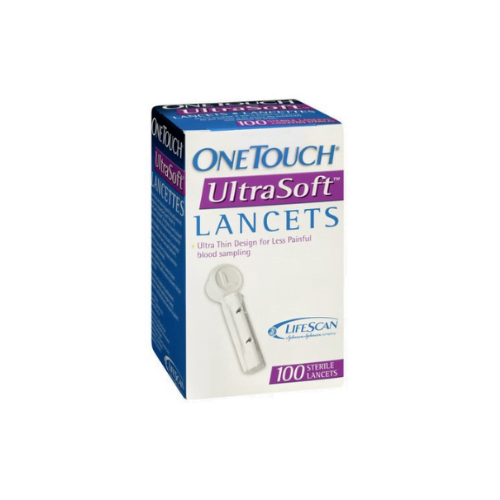
OneTouch Ultra Soft Lancets
Buy OneTouch Ultra Soft Lancets Online
Secure Encrypted Payments
OneTouch Ultra Soft Lancets are sterile, single-use lancets for capillary blood sampling during routine blood glucose testing. They can be ordered for diabetes monitoring, and you can choose the quantity shown during ordering to match your testing routine and clinician directions. BorderFreeHealth offers US delivery from Canada for customers who need to keep diabetes supplies stocked consistently.
These lancets are small, fine-point needles used with a compatible lancing device to make a quick fingertip puncture. They do not contain medicine, do not treat blood sugar by themselves, and do not replace your meter, strips, insulin, tablets, diet plan, or clinical care. Their role is practical: help obtain a blood drop so your blood glucose meter can read a sample.
OneTouch Ultra Soft Lancets Price and Ordering
You can buy OneTouch Ultra Soft lancets online and view the current price during checkout. Many customers plan lancet refills with other diabetes supplies so they do not run out of testing materials before their next glucose check. Current pricing can vary by quantity, supplier costs, and product availability at the time you place the order.
OneTouch UltraSoft lancets 100 count is a common pack size referenced by people who test regularly. If more than one quantity is shown, choose the count that fits your testing frequency and storage needs. For example, someone testing several times daily may need to reorder sooner than someone testing occasionally under clinician direction.
Cash-pay customers often look at the OneTouch Ultra Soft lancets price together with meter strips, sharps disposal supplies, and any diabetes medications they already use. Keeping those items on a single reorder schedule can reduce missed tests caused by supply gaps. BorderFreeHealth also displays product costs before final checkout, so you can make an informed out-of-pocket decision.
Compatibility With OneTouch Lancing Devices
OneTouch Ultra Soft lancing device compatibility matters because lancets must fit securely in the device that loads, arms, and releases them. These lancets are designed for use with compatible OneTouch UltraSoft-style lancing devices. Always follow the device instructions for loading, depth selection, release, and lancet ejection.
Do not assume every lancet fits every lancing device. Some devices use proprietary lancets, while others accept more than one compatible style. If you are replacing an older box, compare the product name, gauge, and device instructions before switching. If your device guide lists a different lancet style, ask a pharmacist or healthcare professional before using a substitute.
The phrase OneTouch Ultra lancets is sometimes used loosely for lancets used with OneTouch systems. For safe use, rely on the exact lancet name and your lancing device manual rather than similar wording alone. A secure fit helps the device puncture predictably and eject the used lancet safely.
How These Lancets Work for Diabetes Testing
OneTouch UltraSoft lancets are fine needles housed in a plastic body. When placed into a compatible device, the lancet punctures the skin quickly to obtain a small drop of capillary blood. The blood sample is then applied to a test strip inserted into a blood glucose meter.
Fingerstick testing is used by people with type 1 diabetes, type 2 diabetes, gestational diabetes, or other conditions where a clinician recommends home glucose monitoring. The lancet itself does not measure glucose. Accurate readings depend on the meter, compatible strips, hand cleanliness, sample size, strip storage, and correct technique.
Gauge refers to needle thickness. OneTouch UltraSoft lancets 28 gauge are commonly associated with this product line, and higher gauge numbers generally mean thinner needles. A thinner lancet may feel different from a thicker one, but comfort also depends on depth setting, fingertip condition, and how often you rotate testing sites.
How to Use OneTouch Ultra Soft Lancets
Wash your hands with soap and warm water, then dry them fully before testing. Clean, dry skin helps reduce contamination and makes it easier to form a blood drop. Load a new sterile lancet into the compatible lancing device according to the device instructions, then remove the protective cap as directed.
- Insert one new lancet into the lancing device.
- Set the depth to the lowest level likely to produce enough blood.
- Press the device against the side of a fingertip.
- Release the lancet using the device trigger.
- Apply the blood drop to the test strip as your meter instructions describe.
- Eject the used lancet into a sharps container immediately after testing.
Use the side of the fingertip rather than the center pad when possible. The side often feels less tender and still provides a usable sample. If a blood drop is too small, gently massage toward the puncture site rather than squeezing hard, which can affect sample quality.
Quick tip: Rotate fingers and puncture sites to reduce soreness over time.
Single-Use Safety and Sharps Disposal
Use a new sterile lancet for every test. Reusing a lancet can make the tip dull, increase discomfort, and raise contamination risk. Never share lancets or lancing devices, even with family members, because bloodborne infections can spread even when no blood is visible.
After testing, place the used lancet directly into an FDA-cleared sharps disposal container or a puncture-resistant household container allowed by local rules. Do not put loose lancets in household trash or recycling. When the container is about three-quarters full, seal it and follow your community’s disposal instructions.
People who take anticoagulants or antiplatelet medicines may bleed or bruise more after a fingerstick. Those with bleeding disorders, severe neuropathy, poor circulation, infected skin, or fragile fingertips should ask a healthcare professional about safer site selection and depth settings. Stop using a puncture site and seek care if redness spreads, warmth increases, pus appears, or fever develops.
Storage, Travel, and US Delivery From Canada
Store unopened and opened boxes in a clean, dry place at normal room conditions. Keep lancets away from moisture, dirt, direct heat, children, and pets. Leave each lancet protected until use so the sterile tip stays covered.
For travel, pack enough lancets, strips, and meter supplies for the full trip plus extra. Keep diabetes testing supplies in carry-on luggage when flying, and bring a compact sharps container or another approved travel disposal option. If a lancet cap is damaged, missing, wet, or dirty, discard that lancet without using it.
Orders may qualify for prompt, express shipping. If you rely on regular glucose monitoring, reorder before your current supply is nearly empty so weather, holidays, or carrier delays do not interrupt testing. Customers sourcing products through Canadian pharmacy channels can also browse items by country of origin when that information helps with planning.
Benefits for Routine Glucose Monitoring
These lancets support a consistent fingerstick routine when paired with the right device, meter, and strips. A dependable lancet helps create an adequate blood drop without repeated punctures. That can make daily monitoring less frustrating, especially for people who test at set times such as fasting, before meals, after meals, or at bedtime.
Comfort depends on technique. Many users find that a lower depth setting, warm hands, and fingertip rotation reduce tenderness. If the first setting does not produce enough blood, adjust gradually according to the device guide rather than immediately selecting the deepest setting.
Because lancets are not medications, they have no drug interactions and no active ingredient. They can be used alongside diabetes treatments such as insulin, non-insulin injectable medicines, or oral therapies when your clinician recommends fingerstick testing. The main safety concerns are puncture discomfort, bleeding, bruising, infection prevention, and sharps disposal.
Side Effects, Warnings, and Cautions
Most effects are minor and limited to the puncture site. Common issues include brief fingertip pain, a small drop of bleeding, mild redness, tenderness, or a tiny bruise. These effects usually improve when you rotate sites, use a fresh lancet, and avoid excessive depth.
- Do not use a lancet if the protective cap is missing or damaged.
- Do not clean and reuse a used lancet.
- Do not puncture swollen, infected, burned, or injured skin.
- Do not share a lancing device unless it is designed and cleaned for professional multi-patient use.
- Do not leave used lancets where children, pets, or caregivers can be stuck accidentally.
Contact a healthcare professional if you have repeated bleeding, worsening pain, numbness that affects safe testing, or signs of infection. If you have poor circulation or reduced fingertip sensation, ask whether alternate site testing is appropriate with your meter and clinical plan.
Refills, 100 Count Packs, and Supply Planning
OneTouch UltraSoft lancets refills are commonly planned around testing frequency. If you test once daily, a 100-count pack lasts much longer than it would for someone testing before meals and at bedtime. Your clinician’s testing schedule should guide how often you reorder.
Keep an unopened backup box if regular testing is part of your diabetes care. Lancets are small, but they are essential when your meter requires a capillary blood sample. Running out can make it harder to track patterns that help your clinician adjust care.
People managing diabetes often coordinate lancets with strips, meter batteries, insulin pen needles, syringes, alcohol swabs if used, and sharps containers. Educational reading for type 1 diabetes and type 2 diabetes may also help you prepare better questions for clinical visits.
Comparing Lancets and Related Supplies
Lancets differ by gauge, device fit, grip shape, and packaging. A lancet that works well in one device may not lock correctly into another. Before changing brands, read your lancing device instructions and confirm that the replacement lancet is compatible.
Some people prefer a different needle gauge, while others care more about device depth settings or easier handling. If fingertip pain is a barrier, ask a clinician or diabetes educator to watch your technique. Small changes in hand warming, site choice, and depth can make a meaningful difference.
For broader supply planning, the diabetes supplies category can help you review adjacent items used in home monitoring. Keep product choices aligned with the meter, strips, and lancing device you already use unless a healthcare professional recommends a change.
Questions to Ask Your Clinician or Pharmacist
Bring practical questions to your next appointment if testing is painful, inconsistent, or hard to fit into your routine. Lancets are simple devices, but technique affects comfort and sample quality.
- Which lancing depth should I start with for my skin type?
- Should I use the first blood drop or wipe it away?
- How often should I test based on my current diabetes plan?
- Can I use alternate site testing with my meter?
- What should I do if my fingertips become sore or callused?
- How should I dispose of sharps in my city or state?
- Do my blood thinners require special precautions for fingersticks?
Why it matters: Better technique can reduce discomfort and help you get a usable blood sample on the first try.
Authoritative Sources
FDA guidance on safely using sharps at home, work, and travel
Health Canada medical devices listing
This content is for informational purposes only and is not a substitute for professional medical advice.
Blood Glucose Unit Converter
Convert glucose readings between mg/dL and mmol/L without changing the clinical value.
mg/dL
-
US reporting unit
mmol/L
-
International reporting unit
These calculations are for education only and do not replace clinical advice, diagnosis, or treatment. Always confirm medical decisions with a qualified healthcare professional.
HbA1c & eAG Calculator
Convert between HbA1c percentage and estimated average glucose using the ADAG relationship.
HbA1c
-
percentage
eAG mg/dL
-
estimated average glucose
eAG mmol/L
-
estimated average glucose
These calculations are for education only and do not replace clinical advice, diagnosis, or treatment. Always confirm medical decisions with a qualified healthcare professional.
CGM Time-in-Range Summary
Summarise CGM percentages across very low, low, in-range, high, and very high glucose bands.
Entered total
-
should equal 100%
Below range
-
very low plus low
Above range
-
high plus very high
Summary
-
common adult CGM targets vary by patient
These calculations are for education only and do not replace clinical advice, diagnosis, or treatment. Always confirm medical decisions with a qualified healthcare professional.
Express Shipping - from $29.99
Prices:
- Dry-Packed Products $29.99
- Cold-Packed Products $39.99
Shipping Countries:
- United States (all contiguous states**)
- Worldwide (excludes some countries***)
Standard Shipping - $19.99
Shipping with this method takes 5-10 days
Prices:
- Dry-Packed Products $19.99
- Not available for Cold-Packed products
Shipping Countries:
- United States (all contiguous states**)
- Worldwide (excludes some countries***)
Is OneTouch UltraSoft Lancets discontinued?
The store offers OneTouch Ultra Soft Lancets for ordering unless the product status shown during checkout changes. If a specific pack size is not available, a pharmacist may suggest a compatible alternative based on your lancing device.
What lancets work with OneTouch Ultra devices?
Use lancets that your specific OneTouch lancing device instructions identify as compatible. OneTouch Ultra Soft Lancets are intended for compatible OneTouch UltraSoft-style lancing devices, but device manuals should guide final selection.
How do you use OneTouch Ultra Soft lancets?
Wash and dry your hands, load a new lancet into the compatible device, choose an appropriate depth, puncture the side of a fingertip, apply the blood drop to the strip, and discard the used lancet in a sharps container.
Can OneTouch Ultra Soft Lancets be reused?
No. Use a new sterile lancet for each test. Reuse can dull the tip, increase pain, and raise contamination risk. Never share lancets or lancing devices with another person.
What gauge are OneTouch UltraSoft lancets?
OneTouch UltraSoft lancets are commonly described as 28 gauge. Gauge relates to needle thickness; comfort also depends on depth setting, fingertip rotation, and using a fresh lancet each time.
Do lancets affect blood glucose readings?
Lancets do not measure glucose, but good sampling technique helps the meter and strip receive an adequate blood drop. Clean hands, compatible strips, proper strip storage, and correct meter use are also important.
How should used lancets be thrown away?
Place used lancets directly into an FDA-cleared sharps container or a puncture-resistant container allowed by local rules. Do not place loose lancets in household trash or recycling.
Rewards Program
Earn points on birthdays, product orders, reviews, friend referrals, and more! Enjoy your medication at unparalleled discounts while reaping rewards for every step you take with us.
You can read more about rewards here.
POINT VALUE
How to earn points
- 1Create an account and start earning.
- 2Earn points every time you shop or perform certain actions.
- 3Redeem points for exclusive discounts.
You Might Also Like
Select options
This product has multiple variants. The options may be chosen on the product page
Select options
This product has multiple variants. The options may be chosen on the product page
Select options
This product has multiple variants. The options may be chosen on the product page
Select options
This product has multiple variants. The options may be chosen on the product page