
Please note: a valid prescription is required for all prescription medication.
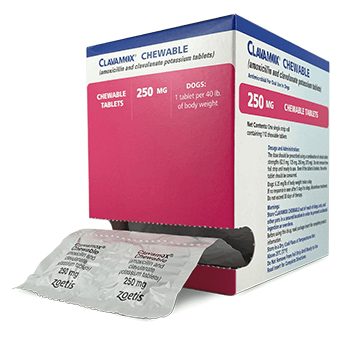
Clavamox
Buy Clavamox Online
Secure Encrypted Payments
Clavamox is a veterinary antibiotic for dogs and cats with susceptible bacterial infections. You can buy Clavamox online, view current price details, and choose the strength, form, and quantity that match your veterinarian’s directions. It contains amoxicillin with clavulanate potassium, a combination used when the bacteria involved may resist amoxicillin alone.
This medicine is commonly used in veterinary care for skin and soft tissue infections, some dental or periodontal infections in dogs, and selected urinary or respiratory infections when the veterinarian considers it appropriate. The right product choice depends on the animal, infection type, dose schedule, and form your clinic has recommended. US delivery from Canada may apply to supported orders, and product handling needs should be considered before checkout.
Clavamox Price, Strength, and Form Choices
Clavamox price should be judged by the complete product choice, not by the visible number alone. Tablets, chewable tablets, drops, and oral suspension can differ in strength, total contents, storage needs, and how many doses they provide. A lower total cost may not fit your pet’s course if the strength, bottle size, or quantity does not match the clinic’s instructions.
Common veterinary tablet strengths include 62.5 mg, 125 mg, 250 mg, and 375 mg, depending on market availability. Terms such as Clavamox 125 mg for dogs, Clavamox 250 mg for dogs, and Clavamox 375 mg for dogs usually refer to strength matching. They should not be used to choose a dose without the veterinarian’s plan, because weight, infection site, and treatment duration all matter.
Liquid products require extra attention. Clavamox drops, Clavamox liquid, and Clavamox oral suspension are not interchangeable with a single tablet strength. The concentration after mixing, the total mL in the bottle, and the amount drawn into the oral syringe determine how long the bottle may last. Tablets are usually easier to compare by count and strength, while liquids may be more practical for smaller pets or animals that cannot swallow tablets.
Quick tip: Match the product name, form, strength, and quantity to the veterinarian’s written directions before comparing total cost.
| Form | What to Match | Practical Buying Point |
|---|---|---|
| Tablets | Strength and tablet count | Useful when the clinic gives a tablet-based schedule |
| Chewable tablets | Strength, count, and palatability | May help some dogs accept medicine more easily |
| Drops or oral suspension | Concentration, bottle volume, and measuring method | Often helpful when accurate small-volume dosing is needed |
How to Order Clavamox
To order Clavamox, choose the form and strength that align with the directions from your veterinarian. Keep the clinic’s instructions nearby so the medicine, quantity, and dose schedule are consistent. If the clinic wrote for oral suspension, do not switch to tablets unless the veterinarian approves the change.
The order process is simplest when the active ingredient, dosage form, strength, and quantity all agree with the treatment plan. If your pet has taken this antibiotic before, do not assume a previous bottle or tablet strength is right for a new infection. Recurring symptoms can involve different bacteria, different treatment lengths, or a need for culture testing.
Cash-pay ordering can help pet owners manage Clavamox cost without relying on insurance. Product form and total quantity still matter more than the lowest visible price, because the goal is to complete the course your veterinarian intended. For broader browsing, the Pet Medications category groups veterinary products in one place.
What Clavamox Treats in Dogs and Cats
Clavamox antibiotic therapy is used for susceptible bacterial infections in dogs and cats. Official product information describes use for canine skin and soft tissue infections, certain periodontal infections in dogs, and feline skin and soft tissue infections. Veterinarians may also use amoxicillin Clavamox products in selected urinary or respiratory cases when the suspected or confirmed bacteria fit this medicine.
The combination includes amoxicillin, a penicillin-class antibiotic, and clavulanate potassium, a beta-lactamase inhibitor. Beta-lactamase is an enzyme some bacteria make to weaken certain antibiotics. Clavulanate helps protect amoxicillin from that enzyme, which can make the combination useful when amoxicillin alone may not be enough.
Clavamox for dogs and Clavamox for cats should be used for bacterial infections, not viral illness or vague symptoms. If your pet has coughing, urinary accidents, wounds, dental pain, or skin drainage, the veterinarian may need an exam, culture, dental assessment, or other testing. For condition-based browsing, see related collections for Skin And Soft Tissue Infection, Urinary Tract Infection, and Respiratory Tract Infection.
Choosing Tablets, Chewables, Drops, or Suspension
Clavamox tablets for dogs and Clavamox tablets for cats may be practical when the pet accepts pills and the prescribed strength fits the animal’s weight. Some tablets may be easier to handle than liquid during travel or busy morning routines. Storage is also simpler for most tablet products because they are generally kept dry at room temperature unless the label says otherwise.
Clavamox chewable for dogs may help with administration when a dog resists standard tablets. Chewable medicine still needs the same careful product match as any other form. Flavor acceptance varies, and a pet that spits out part of a chewable may not receive the intended amount.
Clavamox drops for cats and Clavamox suspension can be useful when small dose adjustments or easier swallowing are priorities. Shake liquid products when directed, measure with an oral syringe, and avoid household spoons. If a liquid is supplied as powder for mixing, use the exact label or clinic instructions rather than estimating the water volume.
If your pet refuses a dose, call the clinic before crushing tablets, splitting chewables, mixing medicine into a full meal, or changing forms. Some changes can affect how much medicine the animal actually receives. The article Clavamox For Cats And Dogs can help you prepare practical questions about forms and administration.
Safe Use During the Treatment Course
Use Clavamox exactly as the veterinarian directs. Antibiotics are usually given for a defined course, and stopping early can leave an infection unresolved. Do not share leftover Clavamox pet meds between animals, even when symptoms look similar, because species, weight, allergy history, and infection type can change the plan.
Ask whether doses should be given with food. Some dogs and cats tolerate amoxicillin-clavulanate better with a small meal, especially if they have a sensitive stomach. If vomiting occurs shortly after dosing, or diarrhea becomes persistent, contact the veterinarian instead of repeating the dose or changing the schedule on your own.
Missed doses should be handled according to the clinic’s instructions. Many antibiotic schedules rely on consistent spacing to keep drug exposure steady. Doubling a dose can increase stomach upset and does not reliably improve infection control, so get guidance if the schedule has been disrupted.
Why it matters: A clean match between medicine, schedule, and course length helps the veterinarian judge response if symptoms persist.
Storage, Handling, and Shipping Considerations
Storage requirements differ by form. Tablets are typically stored in a dry room-temperature location away from heat, light, and moisture. Liquid or drop products may need refrigeration after mixing and often have a shorter usable period than tablets. Always follow the label on the container you receive.
During travel, keep Clavamox in its original labeled container. Pack tablets away from moisture, and keep liquid medicine upright in a sealed bag. If refrigeration is required, use an insulated carrier, avoid freezing, and return the bottle to recommended storage as soon as possible.
Handling needs matter when arranging shipment. Prompt, express shipping may be useful for supported orders, especially when timing and storage are important. Once the medicine arrives, follow the label immediately, including any instructions for refrigeration, shaking, measurement, or discard date after mixing.
Side Effects, Warnings, and Monitoring
The most common practical concerns involve the digestive system. Possible side effects include vomiting, soft stool, diarrhea, reduced appetite, drooling, or mild stomach discomfort. These effects can be temporary, but worsening diarrhea, repeated vomiting, blood in stool, or refusal to eat should be reported to the veterinarian.
Allergic reactions can be serious. Seek urgent veterinary help for facial swelling, hives, collapse, severe weakness, or breathing difficulty. Pets with known reactions to penicillin-class antibiotics or cephalosporins need careful review by the clinic before receiving related medicines.
Some animals need extra caution. Tell the veterinarian about kidney disease, liver concerns, pregnancy, nursing, past severe drug reactions, recent antibiotics, supplements, or other medicines. Tetracycline-class antibiotics may interfere with penicillin-class activity in some situations, and other products can change monitoring needs.
- Digestive effects: vomiting, diarrhea, or appetite changes may occur.
- Allergy signs: swelling, hives, collapse, or breathing trouble need urgent care.
- Course concerns: recurring symptoms may require culture testing or reassessment.
- Medicine history: recent antibiotics can influence the next treatment choice.
- Species safety: do not use in small herbivores unless a veterinarian manages the risk.
Do not give this type of antibiotic to rabbits, guinea pigs, chinchillas, hamsters, or similar small herbivores unless a veterinarian with species expertise specifically directs it. Penicillin-class medicines can disrupt gut bacteria in those animals and may cause serious harm. Keep all pet medicines away from children and other animals.
When to Call the Veterinarian
Contact the clinic if your pet’s symptoms do not improve in the expected timeframe, if new symptoms appear, or if the infection returns after treatment. Skin infections may need wound care, dental infections may require dental treatment, and urinary symptoms may need urine testing. Antibiotics work best when the underlying problem is identified and treated correctly.
Call promptly if your pet misses multiple doses, spits out repeated doses, or refuses the medicine. The clinic may recommend an administration strategy or a different form. Do not substitute another antibiotic, including leftover amoxicillin or a human medication, because strength, formulation, and animal safety can differ.
Before ordering a refill, ask whether another exam or test is needed. Repeated antibiotic courses can contribute to resistance when the bacteria are not susceptible or the diagnosis has changed. For more antibiotic background, Cephalexin For Dogs And Cats and Doxycycline For Dogs And Cats explain how different veterinary antibiotics may be used.
Related Veterinary Antibiotic Choices
Clavamox is not automatically interchangeable with other pet antibiotics. Veterinarians may choose a different medicine when culture results, infection depth, allergy history, species, or tissue penetration points elsewhere. Your role when buying is to choose the medicine and form the clinic intended, then monitor your pet’s response during the course.
Zeniquin is a veterinary fluoroquinolone that may be used for certain susceptible infections when a veterinarian selects that class. Antirobe is another veterinary antibiotic used in different infection contexts, including some cases where clindamycin is appropriate. Baytril Injection is a separate veterinary anti-infective format and should only be considered when the clinic has specifically chosen it.
Related educational articles can help you ask better questions without changing treatment on your own. The Antirobe For Dogs article explains when that medicine may be considered, while Baytril For Dogs And Cats covers another antibiotic class. These resources support discussion with your veterinarian; they do not replace individualized care.
Questions to Confirm Before Checkout
A short check-in with the clinic can prevent product mismatches and wasted doses. Confirm the exact form, strength, quantity, course length, and whether the medicine should be given with food. Also ask what improvement should look like and which side effects should trigger a call.
- Which infection is being treated, and are culture results needed?
- Should the pet receive tablets, chewables, drops, or suspension?
- What strength and quantity are needed for the full course?
- Should doses be given with food or on a specific schedule?
- How should a missed or partly spit-out dose be handled?
- Which side effects require urgent veterinary care?
- Does the liquid need refrigeration after mixing?
These questions are especially important for kittens, puppies, senior pets, pregnant or nursing animals, and pets with kidney, liver, allergy, or digestive concerns. If symptoms are recurring, ask whether culture testing or follow-up is needed before another course. Responsible ordering means buying the correct medicine and using it in a way the clinic can monitor.
Authoritative Sources
Official product information is available from Zoetis animal healthcare product information.
Label information for drops is available through DailyMed Clavamox Drops labeling.
This content is for informational purposes only and is not a substitute for professional medical advice.
Express Shipping - from $29.99
Shipping with this method takes 3-5 days
Prices:
- Dry-Packed Products $29.99
- Cold-Packed Products $39.99
Shipping Countries:
- United States (all contiguous states**)
- Worldwide (excludes some countries***)
Standard Shipping - $19.99
Shipping with this method takes 5-10 days
Prices:
- Dry-Packed Products $19.99
- Not available for Cold-Packed products
Shipping Countries:
- United States (all contiguous states**)
- Worldwide (excludes some countries***)
What is Clavamox used for in dogs and cats?
Clavamox is used in veterinary medicine for susceptible bacterial infections in dogs and cats. Labeling includes canine skin and soft tissue infections, certain periodontal infections in dogs, and feline skin and soft tissue infections. Veterinarians may also consider it for selected urinary or respiratory infections when the bacteria fit this antibiotic.
Is Clavamox the same as amoxicillin?
No. Clavamox contains amoxicillin plus clavulanate potassium. Clavulanate helps protect amoxicillin from some bacterial enzymes called beta-lactamases, which can make the combination useful for certain infections where amoxicillin alone may not be enough.
Can Clavamox tablets be switched with liquid or drops?
Do not switch forms unless your veterinarian approves it. Tablets, chewables, drops, and oral suspension can differ in strength, concentration, measurement, storage, and total amount supplied. The form should match the clinic’s directions for your pet.
What side effects can Clavamox cause?
Possible side effects include vomiting, diarrhea, soft stool, reduced appetite, drooling, or stomach discomfort. Urgent veterinary help is needed for possible allergy signs such as facial swelling, hives, collapse, severe weakness, or breathing difficulty.
How should Clavamox liquid be stored?
Storage depends on the exact product supplied. Many amoxicillin-clavulanate liquid products require refrigeration after mixing and have a limited usable period. Follow the container label, shake when directed, and measure doses with an oral syringe rather than a household spoon.
What should I do if my pet misses a dose?
Follow the clinic’s missed-dose instructions or call the veterinarian if you are unsure. Do not double a dose unless the veterinarian specifically tells you to do so, because extra medicine can increase stomach upset and may not improve treatment.
Rewards Program
Earn points on birthdays, product orders, reviews, friend referrals, and more! Enjoy your medication at unparalleled discounts while reaping rewards for every step you take with us.
You can read more about rewards here.
POINT VALUE
How to earn points
- 1Create an account and start earning.
- 2Earn points every time you shop or perform certain actions.
- 3Redeem points for exclusive discounts.
You Might Also Like
Select options
This product has multiple variants. The options may be chosen on the product page
Select options
This product has multiple variants. The options may be chosen on the product page
Select options
This product has multiple variants. The options may be chosen on the product page
Select options
This product has multiple variants. The options may be chosen on the product page