
Please note: a valid prescription is required for all prescription medication.
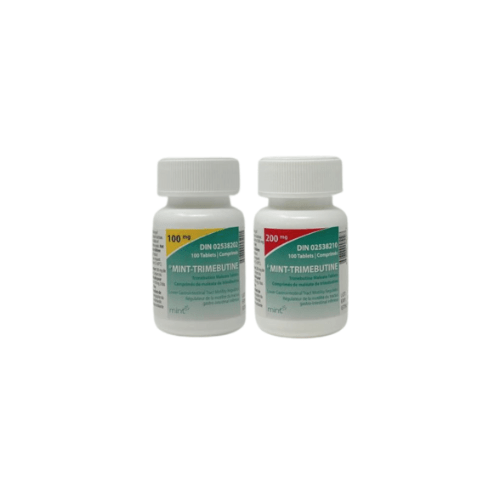

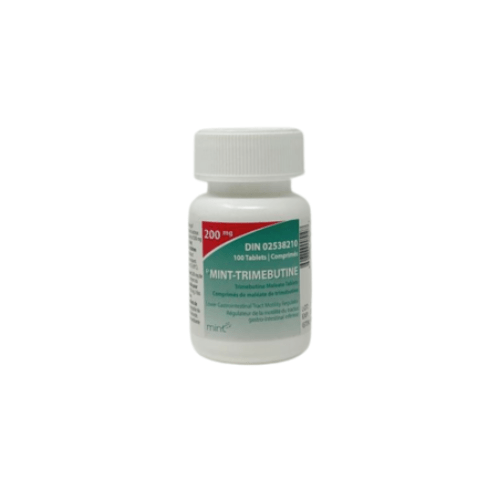
Trimebutine
Buy Trimebutine Online
Secure Encrypted Payments
Trimebutine is a digestive medicine used for certain cramping, abdominal discomfort, bloating, and bowel-movement symptoms linked with functional gastrointestinal disorders. It can be ordered online, with current price shown during checkout and tablet strengths selected to match the directions from your clinician. The product is available as Trimebutine tablets in 100 mg and 200 mg strengths, and some packaging may describe the active ingredient as trimebutine maleate.
People often look for Trimebutine when local retail channels do not routinely carry the medicine or when they need US delivery from Canada. The safest purchase decision starts with the exact medicine name, strength, and use directions, because similar digestive products can work in very different ways. Severe unexplained pain, bleeding, fever, repeated vomiting, black stools, or possible bowel blockage should be assessed urgently rather than treated as routine cramping.
Price, Tablet Strengths, and Ordering Details
The Trimebutine price depends on the strength, quantity, and current pharmacy supply shown during ordering. Choose the 100 mg or 200 mg tablet strength only if it matches the directions you were given, because the two strengths are not interchangeable tablet-for-tablet. If your treatment plan names trimebutine maleate 200 mg, for example, match that wording carefully with the active ingredient and strength on the package.
BorderFreeHealth works with licensed pharmacies for regulated medicine supply, and order details may be checked before a medicine is released. Keep your medication list, diagnosis history, and the exact directions close by when placing an order. That reduces delays caused by unclear strength selection, incomplete directions, or a mismatch between the medicine requested and the symptoms being treated.
Quick tip: Write down your main treatment goal before ordering, such as less cramping, fewer bloating episodes, or steadier bowel rhythm.
| Strength | Form | Practical note |
|---|---|---|
| 100 mg | Tablet | May suit directions that use a smaller tablet strength or more gradual adjustments. |
| 200 mg | Tablet | May be used when the directions call for a higher per-tablet amount. |
Tablet appearance, manufacturer, and package presentation can vary. Those differences do not automatically change the active ingredient, but they make the label important every time you receive a new supply. Do not combine tablets from different containers unless the name, strength, and condition of the tablets clearly match.
What Trimebutine Is Used For
Trimebutine is used in some countries for symptoms associated with irritable bowel syndrome and other functional gastrointestinal disorders. Functional gastrointestinal disorders are conditions where symptoms such as pain, cramping, bloating, diarrhea, constipation, or irregular bowel rhythm occur without an obvious structural cause on routine evaluation. For related condition background, see Irritable Bowel Syndrome.
The medicine is usually considered when gut spasm and motility symptoms are part of the pattern. Motility means the movement of food and stool through the digestive tract. Trimebutine is described as a regulator of gastrointestinal motility, so it may help calm spasms while supporting a more normal movement pattern in selected patients.
It is not a substitute for diagnosis. New severe abdominal swelling, persistent vomiting, fever, black or bloody stools, unexplained weight loss, severe dehydration, or nighttime symptoms should be evaluated promptly. A medicine that helps cramping can still mask a condition that needs different care, such as infection, inflammation, obstruction, or bleeding.
Patients with upper-abdominal fullness, nausea, or meal-related discomfort may need a different discussion than people whose main symptoms are lower-abdominal cramps and bowel changes. If upper digestive symptoms dominate, Functional Dyspepsia may help you frame the symptom pattern before discussing treatment choices with a clinician.
How It Works in the Digestive Tract
Trimebutine acts on the digestive tract to influence intestinal and colonic movement. It has antispasmodic activity, meaning it can reduce gut muscle spasm, and medical references describe effects on pathways involved in gut motility. The practical goal is symptom control, not sedation or pain relief through a narcotic-type treatment plan.
Many people ask whether Trimebutine is a narcotic. It is not used like an opioid pain medicine, and it is not taken to produce painkiller effects or euphoria. Some pharmacology references describe weak activity at opioid receptors in the gut, but that does not make it the same as narcotic pain medicines used for severe pain.
Response is usually judged across the treatment period chosen by a clinician, rather than after one tablet. If symptoms do not improve, if the bowel pattern worsens, or if cramping changes into constant severe pain, the next step is medical reassessment. Do not increase the number of tablets or switch strengths on your own to chase faster relief.
How to Use the Tablets Safely
Use Trimebutine exactly as directed on your medicine label. The daily amount, timing, and treatment length depend on the tablet strength, the reason it was chosen, and the product instructions. Some labels may place doses around meals or at set times of day, so the package directions should be followed carefully.
- Match the strength: 100 mg and 200 mg tablets require different tablet counts.
- Follow timing directions: take doses at the times shown on your label.
- Avoid doubling: follow package instructions if a dose is missed.
- Track symptoms: note pain, bloating, stool changes, and side effects.
- Reassess changes: new bleeding, fever, vomiting, or severe pain needs care.
How long Trimebutine treatment lasts varies. Some people use it for a short defined course, while others are assessed over a longer plan for recurring functional bowel symptoms. Ongoing use should have a clear symptom goal and a plan for what to do if the pattern changes.
A written schedule can help if you use several digestive medicines in the same day. Antacids, laxatives, anti-diarrheal products, fiber, nausea medicines, or acid reducers may all affect how symptoms feel. Keeping a simple list makes it easier to identify what is helping and what may be causing side effects.
Availability in the USA and Canada Supply Context
Trimebutine may not be routinely stocked by every U.S. retail pharmacy chain, which is why searches for Trimebutine CVS, Trimebutine Walgreens, or Trimebutine Walmart are common. Store stock and local handling can differ from country to country. BorderFreeHealth offers a cross-border ordering pathway for customers seeking Ships from Canada to US service for this medicine.
Country-specific labeling, brand names, and generic names can differ. You may see trimebutina, trimebutine maleate, apo trimebutine, or manufacturer names in search results, but the medicine you use should be matched by active ingredient, strength, and directions rather than by a similar-looking brand name. Spanish-language searches such as trimebutina en estados unidos often refer to the same active ingredient, but the package still needs to be read in full.
Cash-pay ordering can be relevant for people whose local plan does not cover a cross-border medicine purchase. The amount shown during ordering is the practical price reference, because costs can change with strength and quantity. Shipping may use prompt, express shipping when appropriate for the order and handling requirements.
Storage, Travel, and Label Checks
Store Trimebutine tablets at the temperature range printed on the package, away from excess heat, moisture, and direct light. Keep tablets in the original container or blister until use unless the label gives different instructions. As with all medicines, keep them out of reach of children and pets.
Travel is easier when the tablets remain in labeled packaging. Carry a current medication list and enough information to show the medicine name and strength. Do not pack loose tablets into an unlabeled bag, because that makes it harder to verify what they are and raises the chance of taking the wrong strength.
Check the expiry date before starting an older supply. Do not use tablets that look damp, broken, discolored, or inconsistent with the package description. If the label, tablet strength, or active ingredient name does not match what you expected, pause and ask a pharmacist or clinician before taking the medicine.
Side Effects, Warnings, and Monitoring
Trimebutine can cause side effects even when used correctly. Reported effects may include dry mouth, nausea, headache, dizziness, tiredness, drowsiness, or changes in bowel pattern. If you feel sleepy or lightheaded, use caution with driving, machinery, and tasks that require full alertness until you know how the medicine affects you.
Get urgent medical help for trouble breathing, facial or throat swelling, severe rash, fainting, severe weakness, confusion, or a sudden worsening of abdominal pain, swelling, or vomiting. These symptoms may suggest an allergic reaction, a serious medication response, or an abdominal condition that needs immediate evaluation.
Why it matters: A cramping medicine can make warning symptoms feel less obvious for a short time.
Use extra caution if you are pregnant, breastfeeding, have significant liver or kidney disease, have a history of major abdominal surgery, or have possible bowel obstruction symptoms. Some product monographs also advise caution or avoidance in younger children, so age-specific use should be guided by a clinician familiar with the product label.
Interactions depend on the full medication list. Tell a healthcare professional about prescription medicines, non-prescription products, supplements, sleep aids, allergy medicines, pain relievers, laxatives, antacids, and anti-diarrheal products. Combining several products that affect alertness or bowel movement can make it harder to identify side effects or worsening illness.
Monitoring is mostly symptom-based. Track abdominal pain, bloating, stool pattern, nausea, dizziness, and any new symptoms. Blood in the stool, unexplained weight loss, persistent fever, dehydration, nighttime diarrhea, or pain that becomes severe and constant should not be handled by changing the Trimebutine dose.
Related Digestive Treatment Choices
Digestive symptoms overlap, so the closest-sounding medicine is not always the right choice. Trimebutine is generally discussed for cramping and motility-related bowel symptoms. Nausea, reflux, constipation, diarrhea, and meal-related fullness may require different treatment choices or additional evaluation.
| Option | Typical role | Why it may differ |
|---|---|---|
| Trimebutine | Cramping and motility-related digestive symptoms in selected patients | Strength, directions, and labeling vary by market |
| Upper motility medicines | Nausea, fullness, or delayed stomach-emptying symptoms | Different cautions and monitoring may apply |
| Acid or reflux treatments | Heartburn, acid irritation, or reflux symptoms | They do not directly target bowel spasm |
| Stool-pattern treatments | Constipation or diarrhea as the main problem | They may worsen the opposite bowel pattern if mismatched |
For broader browsing, the Gastrointestinal category groups related digestive medicines. The Gastrointestinal Articles section adds patient-friendly background on symptom patterns, medicine classes, and when to seek care. Country-of-origin information may also be useful when reviewing medicines sourced from Canada.
Bring your main symptom pattern to the treatment discussion. Cramping with alternating diarrhea and constipation is different from constant pain, reflux after meals, repeated vomiting, or black stools. Clear symptom notes help prevent a mismatch between a gut spasm medicine and a condition that needs another approach.
Authoritative Sources
For labeled tablet information, see the Trimebutine product monograph.
For peer-reviewed clinical background, see this state-of-the-art review of trimebutine.
For substance and pharmacology context, see the DrugBank trimebutine monograph.
This content is for informational purposes only and is not a substitute for professional medical advice.
Express Shipping - from $29.99
Shipping with this method takes 3-5 days
Prices:
- Dry-Packed Products $29.99
- Cold-Packed Products $39.99
Shipping Countries:
- United States (all contiguous states**)
- Worldwide (excludes some countries***)
Standard Shipping - $19.99
Shipping with this method takes 5-10 days
Prices:
- Dry-Packed Products $19.99
- Not available for Cold-Packed products
Shipping Countries:
- United States (all contiguous states**)
- Worldwide (excludes some countries***)
What is Trimebutine used for?
Trimebutine is used in some settings for functional gastrointestinal symptoms such as abdominal cramping, bloating, and bowel-movement irregularity, including symptoms associated with irritable bowel syndrome. It should not be used to delay care for severe pain, bleeding, fever, repeated vomiting, or possible bowel obstruction.
Is Trimebutine available in the USA?
Trimebutine may not be routinely stocked through every U.S. retail pharmacy channel. BorderFreeHealth offers online ordering with U.S.-from-Canada service for customers who need this medicine and can match the selected tablet strength to their treatment directions.
Is Trimebutine a narcotic?
Trimebutine is not used like a narcotic pain medicine. Pharmacology references describe activity on gut motility pathways and weak opioid-receptor activity in the digestive tract, but it is taken for selected gastrointestinal symptoms rather than for opioid pain relief.
How long is Trimebutine treatment?
Treatment length varies with the symptom pattern and the plan set by a clinician. Some people use a short course, while others are reassessed over a longer period. Ongoing or changing symptoms should be reviewed rather than managed by changing tablet strength or frequency on your own.
What side effects can Trimebutine cause?
Possible side effects include dry mouth, nausea, headache, dizziness, tiredness, drowsiness, or changes in bowel pattern. Seek urgent care for trouble breathing, facial swelling, severe rash, fainting, or a sharp worsening of abdominal pain, swelling, or vomiting.
Rewards Program
Earn points on birthdays, product orders, reviews, friend referrals, and more! Enjoy your medication at unparalleled discounts while reaping rewards for every step you take with us.
You can read more about rewards here.
POINT VALUE
How to earn points
- 1Create an account and start earning.
- 2Earn points every time you shop or perform certain actions.
- 3Redeem points for exclusive discounts.
You Might Also Like
Select options
This product has multiple variants. The options may be chosen on the product page
Select options
This product has multiple variants. The options may be chosen on the product page
Select options
This product has multiple variants. The options may be chosen on the product page
Select options
This product has multiple variants. The options may be chosen on the product page