
Please note: a valid prescription is required for all prescription medication.
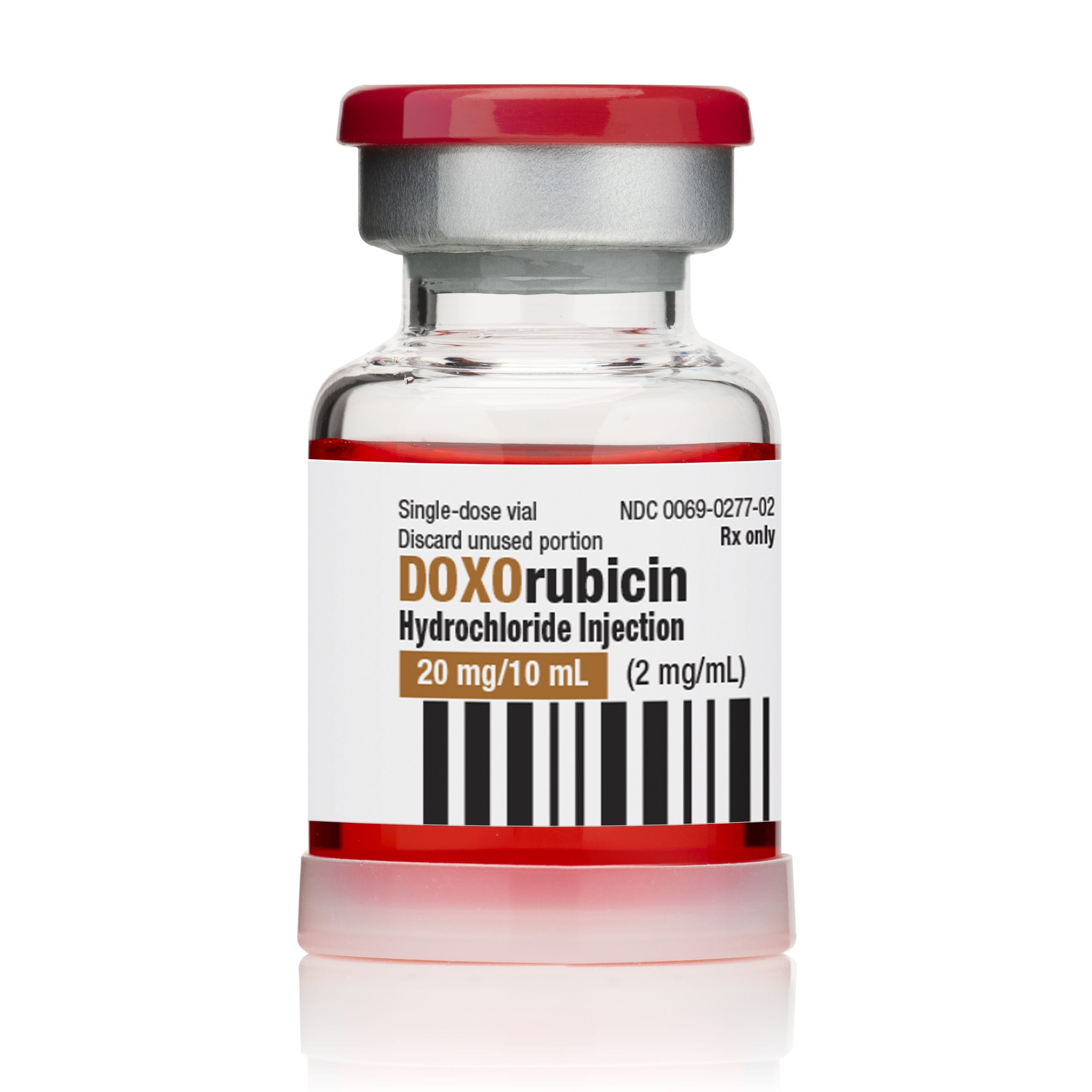
Doxorubicin Vial
Buy Doxorubicin Vial Online
Secure Encrypted Payments
Doxorubicin Vial is an anthracycline chemotherapy injection used in supervised oncology treatment. It can be bought online for clinic-directed use, with the dose, vial strength, form, and quantity matched to the written treatment instructions. Doxorubicin injection must be prepared and administered by trained healthcare professionals, not used for home self-injection.
Doxorubicin hydrochloride injection is commonly supplied for intravenous use in cancer regimens. BorderFreeHealth provides U.S.-from-Canada service context for eligible medication orders, and clinic coordination may be important because injectable chemotherapy requires careful handling, storage, and administration planning.
Doxorubicin Vial Price and Strength Selection
The doxorubicin vial price shown during ordering depends on the strength, form, quantity, and pharmacy sourcing details for the order. Match the active ingredient, vial strength, concentration, vial size, and number of vials to the clinic’s written instructions rather than choosing by total milligrams alone. A lower doxorubicin vial cost is not helpful if the form or quantity does not fit the infusion center’s preparation workflow.
Many liquid doxorubicin hydrochloride injection products use a 2 mg/mL concentration. In that format, a doxorubicin 10 mg vial may contain 5 mL, a doxorubicin 20 mg vial may contain 10 mL, and a doxorubicin 50 mg vial may contain 25 mL. Some products may instead be a doxorubicin lyophilized vial, also called doxorubicin powder for injection, which must be reconstituted by trained staff before infusion preparation.
Quick tip: Ask the infusion center whether it needs liquid solution or powder before choosing the vial form.
People paying without insurance often compare a cash pay doxorubicin vial total with local clinic procurement and pharmacy availability. The final doxorubicin vial cash price can change when the quantity changes, so look closely at the cart before confirming. If treatment spans multiple cycles, ask the clinic whether it wants a separate fill for each appointment or a planned quantity tied to a specific treatment date.
| Detail to match | Why it matters |
|---|---|
| Concentration | A doxorubicin vial 2 mg/mL format tells the clinic how many milligrams are in each milliliter. |
| Strength per vial | The vial strength helps the pharmacy and clinic prepare the ordered amount accurately. |
| Form | Solution and lyophilized powder require different preparation steps. |
| Quantity | The number of vials affects the order total, storage, and handling plan. |
| Storage requirements | Some presentations may require refrigeration, light protection, or other label-directed handling. |
How to Order Doxorubicin Vial Online
To order doxorubicin vial online, choose the vial form and strength that match the treatment center’s instructions, then enter the requested patient and order information at checkout. Keep the clinic’s contact details available in case product, timing, or preparation questions need clarification before release.
This chemotherapy vial should align with the infusion center’s preparation process. It is not intended for home injection, home mixing, or unsupervised use. If the clinic will receive, store, or administer the medicine, confirm those arrangements before checkout so the vial can be handled according to the treatment plan.
US delivery from Canada may be part of the ordering route for this medication when the order and handling requirements can be supported. Focus on the exact vial form, strength, and clinic receiving plan rather than relying only on a requested arrival date. Injectable oncology medicines may require added coordination between the pharmacy, patient, and infusion center.
What Doxorubicin Injection Treats
Doxorubicin HCl injection is an anthracycline chemotherapy. It works by interfering with DNA activity in rapidly dividing cells, which can help treat certain cancers as part of a broader oncology plan. It may be used alone in some settings, but many regimens combine it with other anticancer medicines.
Oncology teams may use doxorubicin hydrochloride injection in treatment plans for breast cancer, leukemias, lymphomas, sarcomas, ovarian cancer, and other cancers when the regimen is appropriate. If you are reviewing related oncology categories, the Cancer category can help place this medicine among other cancer treatments. Condition collections such as Breast Cancer, Leukemia, and Lymphoma may also help organize treatment discussions with the care team.
The decision to use this chemotherapy depends on cancer type, stage, prior treatments, organ function, blood counts, heart history, and cumulative exposure to anthracycline medicines. Doxorubicin should be administered only in a setting prepared to manage infusion reactions, tissue injury, and urgent complications.
Vial Forms, Concentration, and Preparation
A doxorubicin injection vial may be supplied as a ready-to-dilute solution or as doxorubicin for injection USP in powder form. Commonly referenced presentations include doxorubicin 10 mg vial, doxorubicin 20 mg vial, and doxorubicin 50 mg vial. Availability can vary by manufacturer, lot, and formulation, so the clinic’s instructions should guide the final choice.
The liquid form is often described as doxorubicin hydrochloride injection at 2 mg/mL. In that format, the concentration stays the same while total vial volume changes. A doxorubicin single dose vial may be requested in some clinical settings, while other packaging choices depend on institutional policy and pharmacy workflow.
Powder presentations require reconstitution before further dilution for infusion. Staff must follow the product label, hazardous-drug procedures, and local preparation policies. Patients should not open, mix, dilute, transfer, or inject doxorubicin vial contents.
Why it matters: Matching form and strength helps the infusion center prepare the prescribed regimen safely.
Clinic Administration and Treatment Timing
Doxorubicin is given intravenously, usually through a peripheral IV line or central access device. Dosing schedules depend on the oncology protocol, body-surface-area calculations, organ function, lab results, and other medicines in the regimen. The clinic sets the treatment calendar; do not change appointments or dosing plans on your own.
Before each cycle, the care team may check blood counts, liver tests, symptoms since the previous infusion, and heart-related risk factors. If results fall outside the safe range, treatment may be delayed or adjusted. That monitoring is a normal part of anthracycline chemotherapy and helps reduce avoidable harm.
Doxorubicin is a vesicant, meaning it can damage tissue if it leaks outside the vein. Tell the nurse immediately about burning, swelling, pain, tightness, or redness near the IV site. Early reporting gives the clinic the best chance to respond quickly.
If an infusion appointment is missed, contact the treatment center as soon as possible. The clinic may need updated labs, revised timing, or new preparation instructions before another attempt. Do not store a vial for later personal use unless the healthcare team gives written handling directions.
Storage, Handling, and Transport Basics
Doxorubicin injection is handled as a hazardous drug. Pharmacies and infusion centers follow product labeling, temperature requirements, light protection instructions, and safe handling procedures. If the vial is supplied for transport to a clinic, keep it in the packaging provided and follow the written directions exactly.
Do not store the vial near food, children, or pets. Do not freeze, heat, shake, or expose it to unnecessary light unless the official label gives different instructions. If packaging arrives damaged, temperature exposure is unclear, or the vial appearance looks unusual, contact the pharmacy or clinic before it is used for treatment preparation.
For travel to an infusion appointment, bring identification, clinic contact details, and any paperwork the treatment center requested. If the clinic needs the medicine delivered directly rather than carried by you, make that plan before checkout. A single logistics request may include prompt, express shipping when supported for the order, but temperature and hazardous-drug handling instructions remain more important than speed.
Side Effects, Warnings, and Monitoring
Doxorubicin can cause side effects during infusion and between cycles. Common reactions include nausea, vomiting, fatigue, hair loss, mouth sores, appetite changes, low blood counts, and temporary red-orange urine discoloration after dosing. The oncology team may recommend anti-nausea medication, mouth care steps, hydration guidance, and infection precautions.
Serious risks include severe myelosuppression, which means low blood cell counts that raise infection, anemia, and bleeding risk. Fever, chills, shortness of breath, unusual bruising, bleeding, severe weakness, or signs of infection should be reported urgently. Blood counts are often monitored because levels may fall after treatment and recover before the next cycle.
Doxorubicin has an important heart safety warning. It can cause cardiomyopathy, a weakening of the heart muscle, and the risk may increase with higher cumulative exposure, prior anthracycline therapy, chest radiation, existing heart disease, or other medicines that affect the heart. The care team may order cardiac testing before or during therapy.
Infusion-site tissue injury is another key concern. Severe pain, swelling, blistering, or skin changes near the IV line require immediate clinical attention. Doxorubicin may also increase the risk of secondary malignancies in some treatment contexts, especially when used with certain other chemotherapy agents or radiation.
- Call promptly for fever, chills, or infection symptoms.
- Report chest pain, new swelling, or breathing trouble.
- Tell staff right away about burning at the IV site.
- Ask about mouth care before sores become severe.
- Share unusual bruising or bleeding immediately.
Interactions, Suitability, and Lab Checks
Tell the oncology team about all medicines, supplements, and herbal products you take. Some therapies may increase heart risk, affect liver handling, or add to bone marrow suppression. Live vaccines are generally avoided during immunosuppressive chemotherapy unless the care team gives specific direction.
People with significant heart disease, reduced heart function, prior anthracycline exposure, severe liver impairment, uncontrolled infection, or a history of severe hypersensitivity may need a different plan or closer monitoring. The clinic weighs these factors against the intended regimen, cancer status, and available alternatives.
Liver function matters because doxorubicin exposure can rise when the liver is not clearing medicine normally. Blood tests may guide whether a scheduled infusion can proceed. Keep a current medicine list and symptom diary, especially if new fatigue, swelling, mouth sores, fever, appetite changes, or dark urine appear between visits.
Comparing Related Oncology Medicines
Doxorubicin is a traditional cytotoxic chemotherapy, not a targeted therapy or immunotherapy. Some cancer plans use different injectable or oral treatments depending on diagnosis, biomarkers, prior therapy, and treatment goals. These products are not interchangeable without direction from the oncology team.
For certain regimens, clinicians may discuss other chemotherapy agents such as Vincristine or immune-based treatment such as Imfinzi. Other oncology medicines, including Darzalex, may be used in very different cancer settings. Use these comparisons to prepare questions, not to substitute one medicine for another.
Targeted therapies such as Vitrakvi and hormone-pathway medicines such as Zytiga illustrate how cancer treatment can vary by tumor type and biology. If sarcoma is part of the care discussion, the Sarcoma collection may help organize related product research.
Questions to Confirm Before Checkout
Before placing an order, confirm the exact active ingredient, form, strength, concentration, and vial count with the infusion center. A doxorubicin vial price may look practical, but the wrong form or quantity can delay treatment. This is especially important when the clinic has specific preparation equipment, hazardous-drug policies, or receiving rules.
- Form needed: solution or lyophilized powder.
- Strength needed: 10 mg, 20 mg, 50 mg, or another instructed amount.
- Concentration: whether the vial is 2 mg/mL.
- Vial type: single-dose or another labeled presentation.
- Receiving plan: patient transport or direct clinic coordination.
- Monitoring plan: labs and heart checks before treatment.
If you plan to buy doxorubicin online with US delivery from Canada, ask the clinic how it wants the vial received and stored. The safest order is the one that matches both the written oncology plan and the treatment center’s preparation workflow.
Authoritative Sources
Official prescribing information for powder presentations provides warnings, preparation instructions, contraindications, and safety language: Official prescribing information.
This content is for informational purposes only and is not a substitute for professional medical advice.
Research & Education Tool
Doxorubicin Vial Dosage Calculator
Enter the vial amount, diluent volume, and target amount to estimate concentration, draw volume on a 1 mL U-100 syringe, and approximate vial yield.
For research and educational use only. Check all values against the product label, certificate of analysis, and any applicable professional guidance before relying on the result.
mg
Concentration
-
mcg / mL
Volume per Dose
-
-
Estimated Draws / Vial
-
rounded down to whole draws
Draw Reference
Enter values to estimate the syringe mark.
0
-
-
-
-
Body Surface Area Calculator
Calculate body surface area from height and weight using the Mosteller equation.
BSA
-
m2, Mosteller equation
These calculations are for education only and do not replace clinical advice, diagnosis, or treatment. Always confirm medical decisions with a qualified healthcare professional.
Absolute Neutrophil Count Calculator
Calculate ANC from white blood cell count, neutrophil percentage, and optional band percentage.
ANC-cells/uL
ANC-10^9/L
These calculations are for education only and do not replace clinical advice, diagnosis, or treatment. Always confirm medical decisions with a qualified healthcare professional.
Express Shipping - from $29.99
Shipping with this method takes 3-5 days
Prices:
- Dry-Packed Products $29.99
- Cold-Packed Products $39.99
Shipping Countries:
- United States (all contiguous states**)
- Worldwide (excludes some countries***)
Standard Shipping - $19.99
Shipping with this method takes 5-10 days
Prices:
- Dry-Packed Products $19.99
- Not available for Cold-Packed products
Shipping Countries:
- United States (all contiguous states**)
- Worldwide (excludes some countries***)
What is Doxorubicin Vial used for?
Doxorubicin Vial contains an anthracycline chemotherapy used in supervised oncology regimens for certain cancers, including breast cancer, leukemias, lymphomas, sarcomas, ovarian cancer, and other cancers when clinically appropriate. The exact use depends on the cancer type, stage, prior treatment, organ function, and the regimen chosen by the oncology team.
Is doxorubicin injection given at home?
No. Doxorubicin injection is prepared and administered by trained healthcare professionals in an oncology setting. It is a hazardous drug and a vesicant, meaning it can damage tissue if it leaks outside the vein, so it should not be mixed, diluted, or injected at home.
What does doxorubicin vial 2 mg/mL mean?
A 2 mg/mL concentration means each milliliter contains 2 mg of doxorubicin. In that format, vial volume determines the total amount in the vial, such as 5 mL for 10 mg, 10 mL for 20 mg, or 25 mL for 50 mg when supplied that way.
What are common side effects of doxorubicin?
Common side effects can include nausea, vomiting, fatigue, hair loss, mouth sores, appetite changes, low blood counts, and temporary red-orange urine after treatment. Fever, unusual bleeding, breathing trouble, chest pain, or severe infusion-site pain should be reported urgently to the care team.
Why does heart monitoring matter with doxorubicin?
Doxorubicin can cause cardiomyopathy, a weakening of the heart muscle. Risk may increase with higher cumulative exposure, previous anthracycline therapy, chest radiation, existing heart disease, or other heart-affecting medicines. The oncology team may use heart testing before or during treatment.
Rewards Program
Earn points on birthdays, product orders, reviews, friend referrals, and more! Enjoy your medication at unparalleled discounts while reaping rewards for every step you take with us.
You can read more about rewards here.
POINT VALUE
How to earn points
- 1Create an account and start earning.
- 2Earn points every time you shop or perform certain actions.
- 3Redeem points for exclusive discounts.
You Might Also Like
Select options
This product has multiple variants. The options may be chosen on the product page
Select options
This product has multiple variants. The options may be chosen on the product page
Select options
This product has multiple variants. The options may be chosen on the product page
Select options
This product has multiple variants. The options may be chosen on the product page