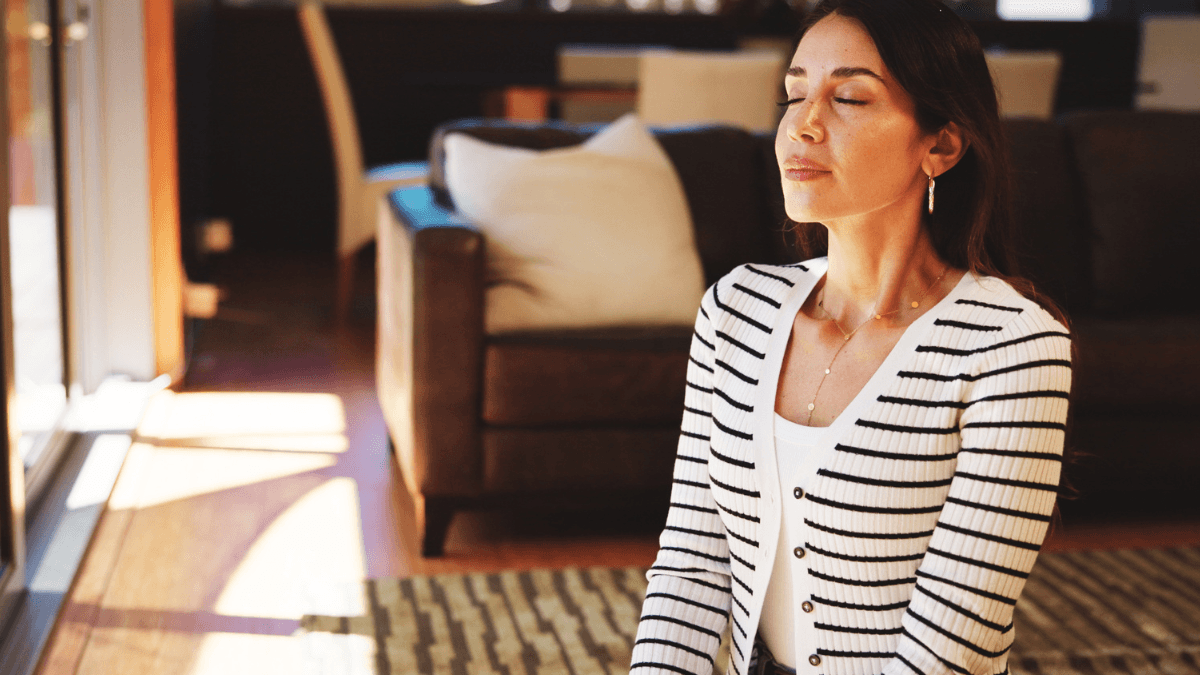
To calm anxiety fast, start with your body before trying to solve your thoughts. If you want to know how to reduce anxiety immediately, use a short reset: orient to the room, lengthen your exhale, release muscle tension, and take one small safe action. These steps can lower the alarm signal enough to help you think more clearly.
Anxiety can feel intense, but it is not a personal failure. Your nervous system is trying to protect you. The goal in the first few minutes is not to erase every anxious thought. It is to help your body feel safe enough for the next decision.
Key Takeaways
- Start with grounding: Name what you see, hear, and feel.
- Lengthen the exhale: Gentle breathing often works better than deep forced breaths.
- Reduce stimulation: Step away from noise, caffeine, screens, and crowds when possible.
- Use one small action: Walk, wash your hands, sip water, or text a calm person.
- Know red flags: Chest pain, fainting, or severe shortness of breath needs urgent care.
A 10-Minute Reset for Anxiety Spikes
A simple sequence works best when anxiety is loud. You do not need perfect technique. You need a repeatable plan that tells your brain, “I am here, and I can take the next step.”
Use this reset when you feel panic rising, your thoughts race, or your body feels wired. If any step makes symptoms worse, pause and choose a gentler option, such as sitting still and naming objects in the room.
| Time | What to do | Why it can help |
|---|---|---|
| 0–60 seconds | Put both feet on the floor. Name the room, date, and five objects you can see. | Orienting brings attention back to the present moment. |
| 1–3 minutes | Breathe in gently. Exhale a little longer than you inhale. | Longer exhales may support the parasympathetic nervous system, the body’s rest-and-digest system. |
| 3–6 minutes | Drop your shoulders, unclench your jaw, and loosen your hands. | Muscle release can reduce bracing signals that keep the alarm loop active. |
| 6–8 minutes | Use one sense strongly: cold water, a textured object, mint, or steady pressure through your feet. | Sensory input gives the mind a concrete anchor. |
| 8–10 minutes | Take one small action, such as washing your hands, stepping outside, or sending a short text. | Safe action restores a sense of control. |
Quick tip: If counting your breath makes you tense, use the phrase “in gently, out longer.”
This is one practical way to use how to reduce anxiety immediately at home, at work, or in a parked car. Do not use breathing exercises while driving if they distract you. Pull over safely first.
Why Anxiety Feels So Physical
Anxiety can cause real body sensations because it activates the sympathetic nervous system, also called the fight-or-flight response. Your heart may race, your chest may tighten, and your stomach may churn even when there is no immediate danger.
Common symptoms of anxiety attack episodes can include trembling, sweating, nausea, dizziness, tingling, shortness of breath, a tight throat, or a feeling of doom. Some people feel restless and keyed up. Others freeze, go quiet, or feel detached from their surroundings.
These sensations can be frightening because they overlap with medical problems. Anxiety skills are useful, but they are not a tool for ruling out illness. If symptoms are new, severe, one-sided, linked with fainting, or include crushing chest pain, seek urgent evaluation.
Why this matters: calming techniques should support safety, not delay needed medical care.
Name the Experience Without Arguing With It
When fear rises, your mind may demand certainty. Try a short label instead: “This is anxiety,” “This is a stress response,” or “My body is in alarm mode.” Labeling does not dismiss your pain. It gives your brain a cleaner frame for what is happening.
Many people ask how to stop anxiety thoughts in the middle of a spike. A useful answer is to stop debating every thought for a moment. First, lower arousal. Then decide what needs attention.
Use the Body Before Logic
During high anxiety, logical reassurance often fails because the body still feels threatened. Body-first tools are usually easier to use. Try slow walking, cold water on your face, pressing your palms together, or noticing the chair under your legs.
These are ways to calm anxiety attack sensations, not cures. They create enough steadiness to help you choose the next safe action. For broader daily coping strategies, see Manage Anxiety Tips.
Panic Attack vs Anxiety Attack: What Changes in the Moment
Panic attacks often peak quickly and can feel sudden, intense, and physical. Anxiety spikes may build more gradually and connect to ongoing worry, stress, or a feared situation. People use both terms in everyday speech, but the pattern can matter.
In panic, the main fear may become the sensations themselves: “I can’t breathe,” “I’m losing control,” or “I’m going to die.” In anxiety, the focus may stay on a problem: health, money, conflict, work, or uncertainty. Both experiences can be deeply distressing.
If episodes arrive out of the blue, repeat often, or lead you to avoid normal activities, consider discussing the pattern with a clinician or therapist. Avoidance can make life smaller over time. Early support may help you keep routines, work, school, and relationships more stable.
What to Do If You Feel Panic Rising
Tell yourself, “This is intense, but I can ride the wave.” Then choose one anchor. Look for straight lines in the room, count slow steps, or describe an object in detail. If you are with someone, ask them to speak slowly and offer simple choices.
If you are supporting another person, avoid arguing with the fear. Say, “You are not alone. Let’s breathe out slowly and sit somewhere quieter.” A calm tone can be more helpful than long explanations.
How to Reduce Anxiety Immediately When You Are Alone
Being alone can make anxiety feel louder, especially when shame or fear keeps you from reaching out. Create a small “connection ladder” before the next spike, so you do not have to plan while overwhelmed.
- Lowest-pressure contact: Send one word, such as “struggling.”
- Steady person: Choose someone who responds calmly.
- Prepared message: Save a text that says, “Can you stay on the phone for five minutes?”
- Support option: Keep crisis and local emergency numbers easy to find.
- Follow-up plan: Write what helped after the spike passes.
When people search how to deal with anxiety when alone, they are often asking for permission to need help. You do not have to explain everything perfectly. A short message is enough to start connection.
If anxiety comes with thoughts of self-harm, feeling unsafe, or fear that you might hurt yourself or someone else, use local emergency services or a crisis line right away. In the U.S. and Canada, 988 can connect people with crisis support.
Stopping the Thought Spiral Without Chasing Certainty
Anxiety often feeds on uncertainty. The more you try to prove that nothing bad will happen, the more your brain may ask for another check. That loop can show up as repeated reassurance seeking, health searches, rereading messages, or replaying conversations.
A better first goal is containment. You are not solving your whole life during a nervous-system surge. You are parking the problem until your body is calmer.
Try a two-sentence worry note. First, write the fear: “I am worried I made a mistake.” Second, write the next safe action: “I will review it tomorrow at 10 a.m.” This can help with how to stop negative overthinking because it turns vague dread into a defined task.
If writing feels like too much, record a 10-second voice note. Keep it boring and specific. “Fear about meeting. Review notes after breakfast.” Then return to grounding.
How to Distract Yourself During a Panic Attack
Distraction works best when it uses your senses or your body. Passive scrolling often fails because the mind still has room to scan for danger. Choose a task that gives your attention a job.
- Color search: Find five blue objects.
- Step count: Walk and count 30 slow steps.
- Texture focus: Hold keys, fabric, or a cool cup.
- Sound anchor: Name three sounds without judging them.
- Simple chore: Fold towels or rinse a dish.
At work or in public, keep it subtle. Press your toes into your shoes, read a sign slowly, or feel your back against the chair. Small anchors can reduce escalation without drawing attention.
Night Anxiety, Sleep, and Racing Thoughts
Night anxiety often worsens because the day gets quiet and distractions fall away. A racing mind can make sleep feel like a test, which raises pressure and keeps the body alert.
If you are wondering how to reduce anxiety immediately at night, lower stimulation first. Dim lights, move away from bright screens, cool the room slightly, and choose one quiet activity. Keep it simple and repetitive. Your aim is to reduce arousal, not force sleep.
For mind racing can’t sleep anxiety, try a “not now” list. Write the worry in one line, then write when you will revisit it. If you cannot sleep after a while, get up briefly and do something calm in low light until drowsiness returns.
Alcohol may feel relaxing at first, but it can fragment sleep for some people. Late caffeine can also worsen palpitations and restlessness. If nighttime anxiety is frequent, track sleep, caffeine, alcohol, stressful events, and symptoms for a week. Bring that pattern to a clinician or therapist.
Food, Drinks, and Natural Options: What Helps Fast
Food and drinks do not switch anxiety off instantly, but they can support your body when hunger, caffeine, or dehydration adds to jitteriness. Think of nutrition as a stabilizer, not an emergency cure.
If you have not eaten for hours, a small snack with protein and carbohydrates may help you feel steadier. Examples include yogurt with fruit, toast with nut butter, cheese and crackers, or eggs with whole-grain toast. Breakfast foods that help with anxiety are usually simple meals that reduce long gaps without food.
Hot drinks to calm anxiety may help through warmth, routine, and slower pacing. Choose decaf tea, warm milk, or another caffeine-free option if caffeine worsens symptoms. There is no single best juice for anxiety and depression, and juice can raise blood sugar quickly in some people. Whole fruit may be a steadier choice for many.
Some people also ask about supplements or natural approaches. “Natural” does not always mean risk-free, especially with pregnancy, liver or kidney disease, bipolar disorder, or prescription medicines. For a safety-first overview, read Natural Anxiety Supplements.
Common anxiety foods to avoid are not universal, but large caffeine doses, energy drinks, and heavy alcohol use can worsen anxiety-like sensations in some people. Notice your own pattern rather than following rigid food rules.
When Medication Questions Come Up
Medication can be part of anxiety care for some people, but it is not the same as an immediate grounding skill. Some medicines are used for ongoing anxiety disorders, while others may be considered for short-term or specific situations. The right discussion depends on diagnosis, health history, other medicines, pregnancy status, substance-use history, and symptom pattern.
People often search for anxiety pills with the least side effects or a list of non addictive anxiety medications. Those are reasonable questions, but the answer is personal. Selective serotonin reuptake inhibitors, often called SSRIs, and serotonin-norepinephrine reuptake inhibitors, called SNRIs, are commonly discussed for ongoing anxiety conditions. Buspirone is another non-benzodiazepine option some clinicians consider for certain anxiety patterns.
For a broader medication conversation starter, see Anxiety Medication Basics. If you are comparing nonprescription products and their limits, Over The Counter Anxiety Options explains why “available without a prescription” does not always mean appropriate.
BorderFreeHealth connects U.S. patients with licensed Canadian partner pharmacies when a prescription is part of a care plan. Where required, the pharmacy may verify prescription details with the prescriber before dispensing. This access context is separate from clinical decision-making, which should stay with your prescriber.
If you are browsing medication information to prepare for an appointment, product pages such as Buspirone, Escitalopram, or Sertraline HCL can help you organize questions. They should not replace medical guidance.
Warning Signs and When to Seek Help
Do not assume every intense sensation is “just anxiety.” Anxiety can mimic medical problems, and medical problems can feel like anxiety. It is safer to seek urgent care when symptoms are severe, unusual, or hard to explain.
- Chest pressure: Especially with sweating, nausea, or arm or jaw pain.
- Fainting: Passing out or nearly passing out needs evaluation.
- Severe breathlessness: Especially if new or worsening.
- Neurologic signs: Weakness, confusion, facial droop, or trouble speaking.
- Safety concerns: Thoughts of self-harm or feeling unable to stay safe.
Also consider professional support if anxiety happens often, disrupts sleep, causes avoidance, affects work or relationships, or leads to repeated emergency visits. Therapy, skills practice, lifestyle changes, and sometimes medication can work together.
Stress also affects the body over time. If you want to understand that connection, Science Of Stress explains how ongoing stress can influence health and coping.
Preparing for the Next Anxiety Spike
A written plan helps because anxious brains do not always remember skills on demand. Keep your plan short enough to use when your mind is racing.
- My first anchor: Feet on floor and five objects.
- My breath cue: Gentle inhale, longer exhale.
- My body cue: Drop shoulders and unclench jaw.
- My safe action: Walk, wash hands, or step outside.
- My support person: Name and saved message.
- My red flags: Symptoms that mean urgent help.
Track only what is useful. Note the trigger, body sensations, what helped, and how long the wave lasted. Over time, patterns may show whether anxiety is linked to sleep, caffeine, conflict, hormones, work stress, or avoidance.
For more education and related reading, you can browse the Mental Health Articles collection. Use it as background, not as a substitute for individualized care.
Authoritative Sources
- National Institute of Mental Health anxiety information
- American Psychological Association panic information
- 988 Suicide and Crisis Lifeline support
When anxiety spikes, start with your body, reduce stimulation, and take one small safe action. If episodes repeat or your symptoms worry you, bring notes to a clinician and ask for a plan that fits your life. With practice and support, how to reduce anxiety immediately can become a skill you can reach for more confidently.
This content is for informational purposes only and is not a substitute for professional medical advice.